What facts about your state’s history should be strongly told?
When a man has a country in which he was born… it becomes sacred to his heart, and it is hard to leave it.” (Seminole talks excerpt –1817-1842)
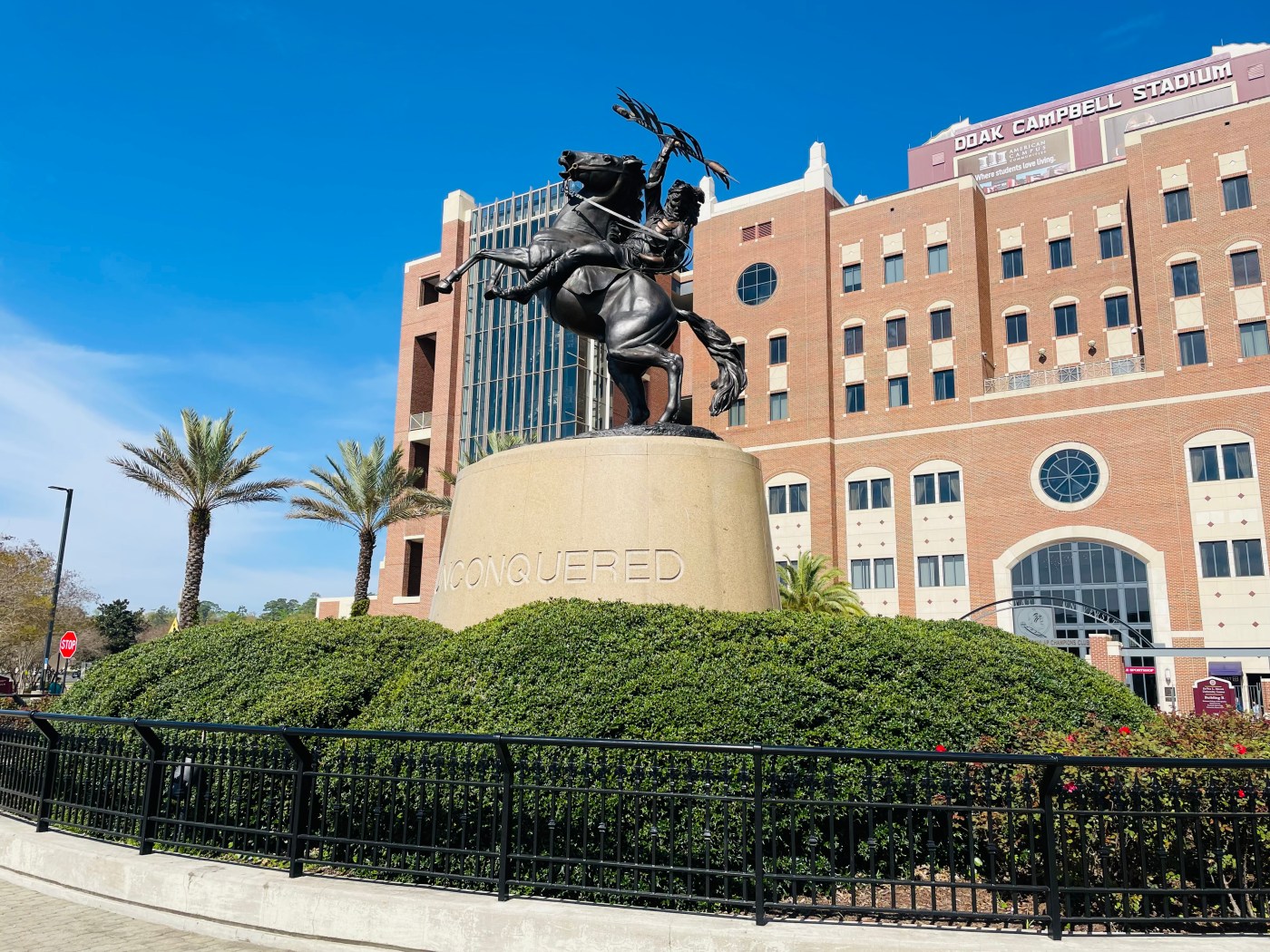
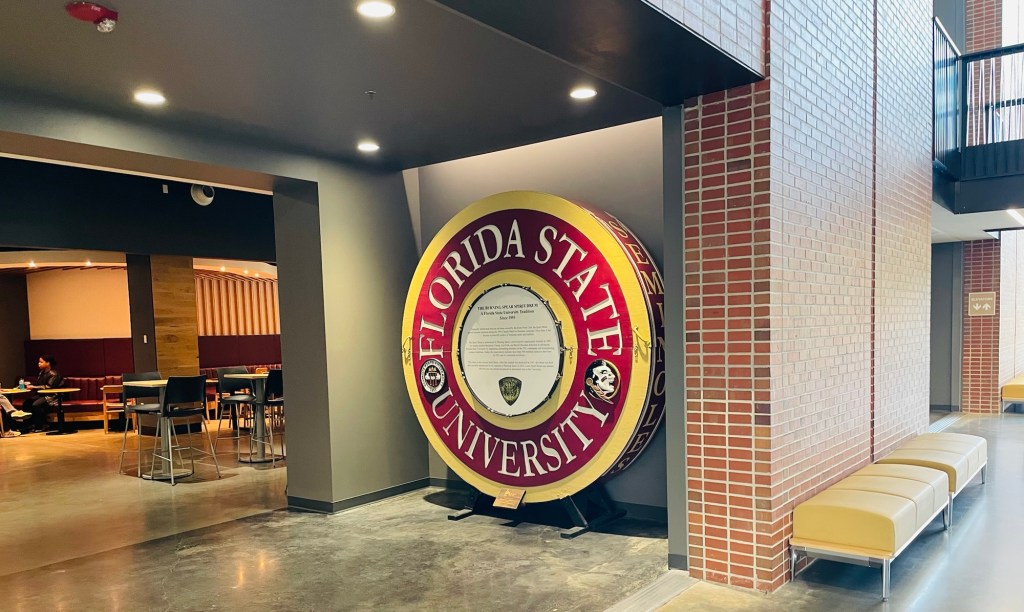
Our 2026 springtime roadtrip began in Tallahassee, the capitol city of the “Sunshine State.” This would be the first time that we actually spent more than one day in Tallahassee. So Ruth and I decided to visit Florida State University for a brief look around that would not take that much effort after our long drive yesterday. As it turned out, we found out at the visitor center that most of the campus would be shut down due to spring break with students gone and traffic minimal. That included the closure of their renowned Museum of Fine Arts, which I was most looking forward to see. So with plan B in mind, we instead walked around the football stadium followed by a brief visit to the Student Union.
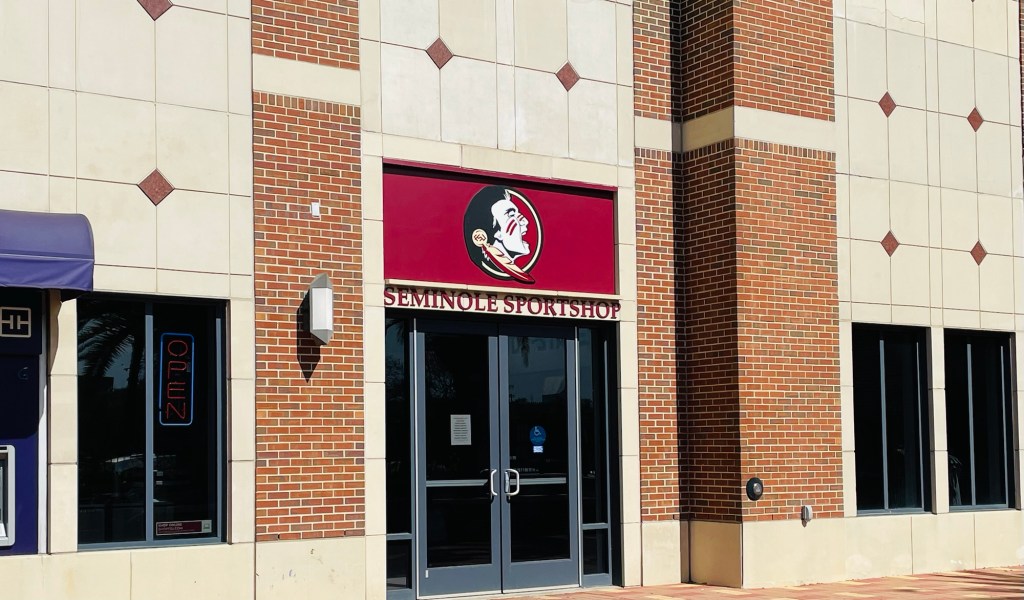
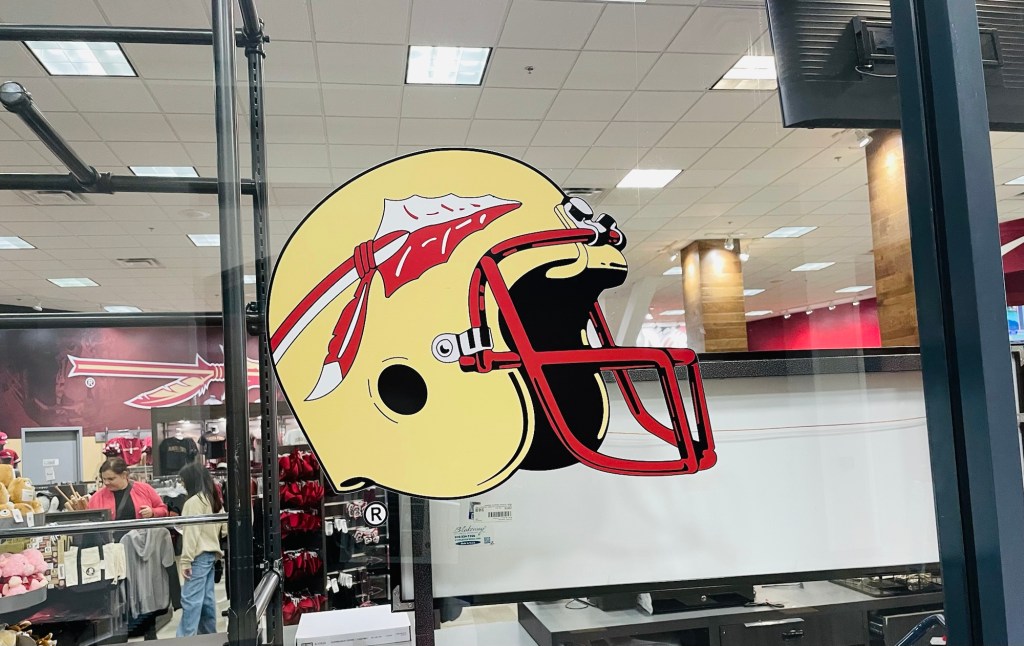
But what struck me most on this eerily quiet morning visit was the obvious presence of the Seminole Indian symbol everywhere I looked. These observations led me to recall flashbacks to my former time as a history teacher when I briefly taught a few pages of textbook reference about the Seminole wars that took place in Florida during the early 19th century. For the facts noted then was that this was a tragic time in American History, which ultimately resulted in mass relocation of Native American tribes from Florida along the “Trail of Tears” route to what is now as the state of Oklahoma.
So as I resume my curious explorations of America as a road tripper again, I remind myself how such travels have a way of changing how history feels. For upon further reflection about this FSU visit, I realize that the ubiquitous Seminole Indian imagery along banners , paintings, and statues I saw then felt much deeper than an enthusiastic school spirit at the time. For these symbols stood for an unconquered people who’s loving spirit for their sacred land lives on today.

 Snippets of a Traveling Mind
It was interesting to see the historic side of the “Seminole Indians” on campus.
LikeLiked by 1 person
It is quite amazing that you can see evidence of their history, culture, and active partnership with the university in numerous ways. Thanks for sharing, and have a good day :) Aiva xx
LikeLike
FSU is one of the most notable universities in Florida and deserved my blog recognition.
LikeLiked by 1 person
😊😊😊
LikeLike