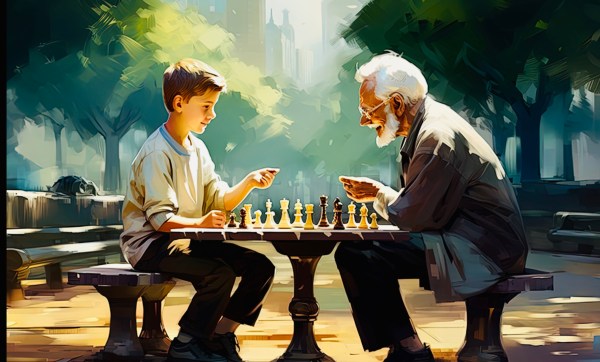
What does the game of chess teach you about life?
“Help your pieces so they can help you.” (Paul Murphy)
In my childhood, I vividly recall the strong influence of my grandfather in helping me find future success in my life. Imagine this curious child watching this scrawny looking Hungarian immigrant defeating me slowly and methodically at chess with mere flicks of his wrist, time after time. So it seemed firmly planted in my mind at a young age that “brains over brawn” best provided a competitive edge over one’s opponent in life.
I would then go on to test my acquired mental strengths learned in chess as I faced challenging school and work situations where so many I encountered appeared bigger, stronger, faster, or more naturally talented than I was. In chess terminology, you might say I envisioned the king chess-piece who stood strong yet relatively cautious on defense in the face of most antagonistic situations. In less threatening instances, I often found the will to simulate the more offensive queen player and take bold chances to move actively ahead with extra effort. Somewhere in between both of these most important chess decision extremes, my symbolic understanding of the interplay involving bishop, knight, pawn, and castle moves in chess likely provided more open minded awareness of cooperative team efforts to expedite complex decisions.
To illustrate further, during my teaching career, one of my learning innovations employed with a highly gifted class I taught in Elementary School involved “Human Chess”, where selected students moved around as the various pieces do in a real game set up on on a life size chessboard outdoors. To begin each of these contests, I’d first require each pupil to dress up and imagine acting in accordance with their assigned chess piece character to get a better feel for the strategic thinking of the game. As the game ensued, they began to walk around the board, move by move, in slow competitive battle knowing each step they took accomplished a specific purpose. In some cases, the student bishops and knights, with queens help would team-up then to synchronize their forward movements to surround the opposing king. Conversely, on other occasions, rooks and pawns would stack up in their best defensive position in support of their king. To win the checkmate title, there’d likely be no throwing, yelling, hitting, or fighting by these normally rambunctious kids to win the game, yet plenty of critical thinking.
These vital life lessons about the quietly contemplative game of chess seem to matter in my country’s money driven culture. Consider the popularity of NFL and college football games for example as they relate to the glorification of player violence. Perhaps you’ve seen the explosive collisions of bodies in those recent games which resulted in the tragic loss of star players Aaron Rodgers and Nick Chubb to season ending leg injury as shown on prime time TV. Given the choice then, would you rather win games with strategic mental preparation combined with naturally gifted skill or by beating down one’s opponent with risk of injury? Take a brief look yourselves then at a video sample of brutal “hits” below. How do they make you feel?
 Snippets of a Traveling Mind