
Miami University’s Coaching Legends

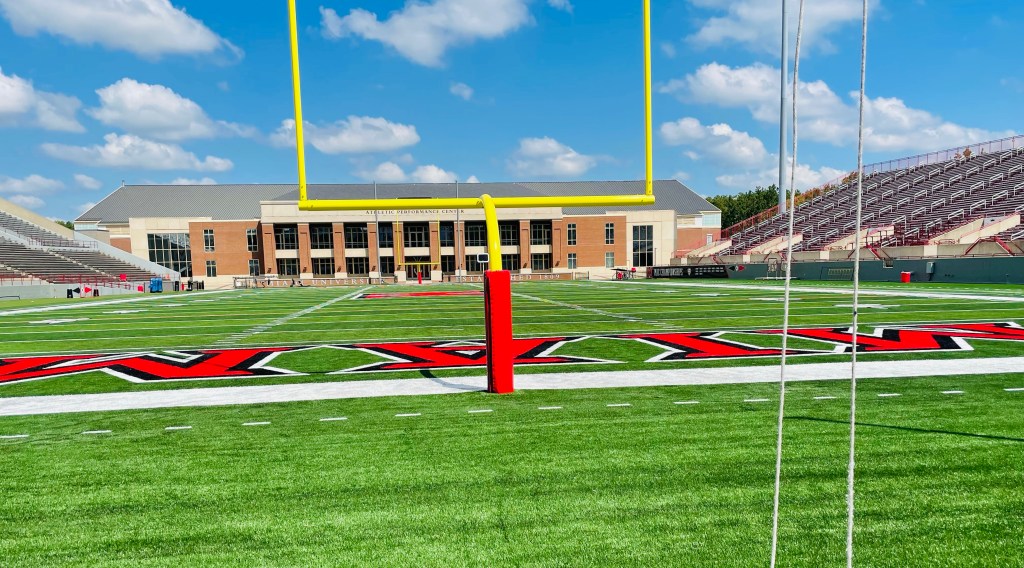
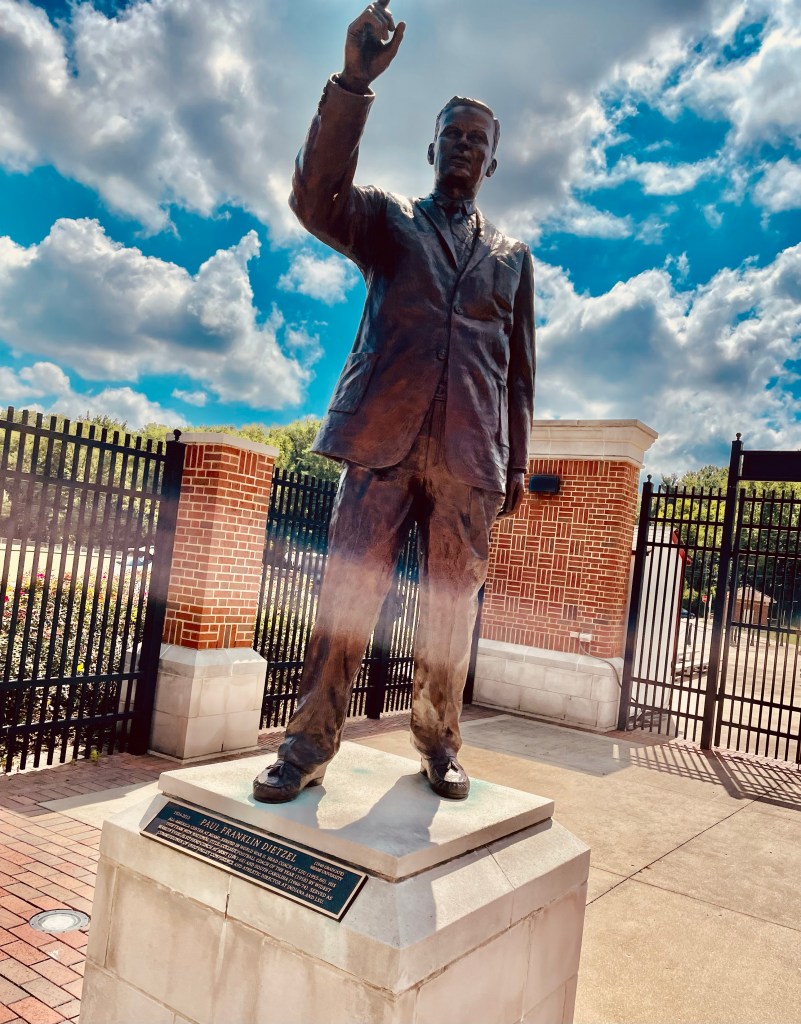
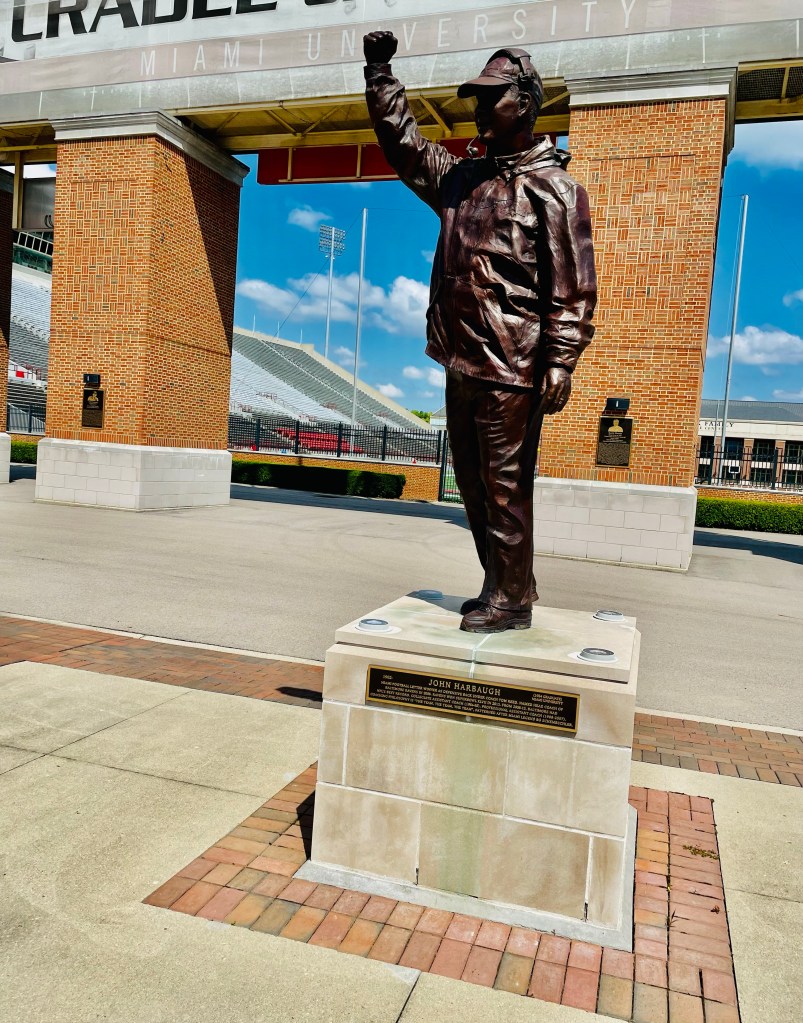
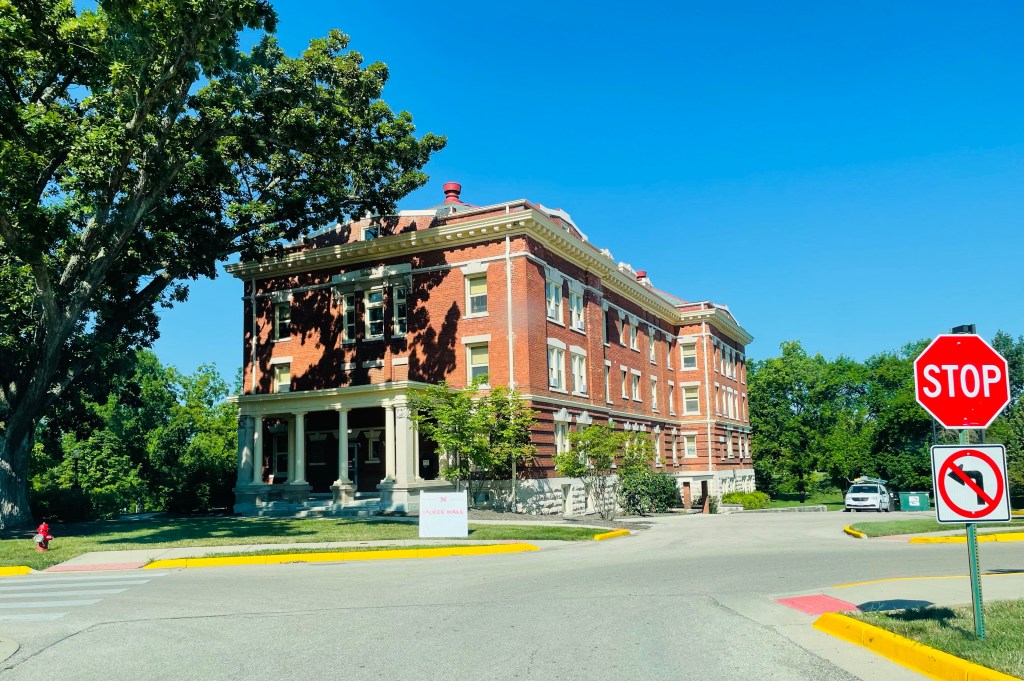
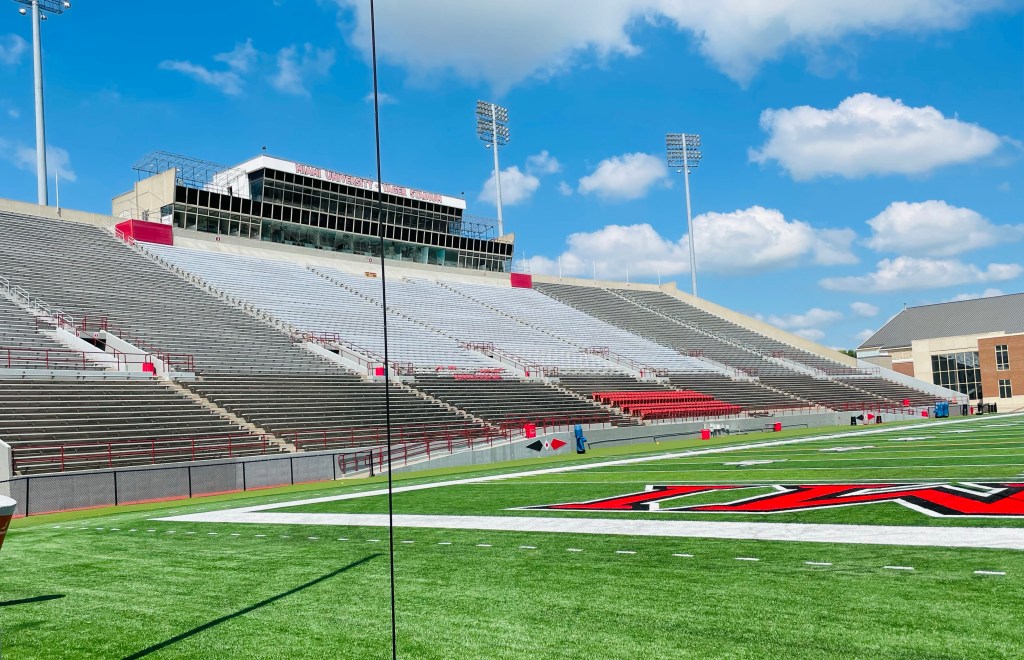
A new generation of college sports enthusiasts often recognizes Miami as that famous football team from South Florida fondly known as the “U”. But there’s another esteemed Miami Center of “Higher Education” in the tiny town of Oxford, Ohio that deserves equal if not more attention in the sports world. For the “RedHawks” of Miami University hold the honorable distinction of producing an impressive number of student alumni who went on to become highly successful coaches in college and professional sports from 1959 to the present. Know then that during our recent road trip tour to the the main Miami campus next to Yager Football Stadium I took particular interest in the “Cradle of Coaches Memorial.” For these hallowed grounds contained an impressive line of life size statues of nine, former football legends with alumni roots to Miami U.

So what exactly did I learn about these iconic football heroes honored in solid bronze who have passed through Miami University over the years that morning? Each of them went on to produce champions wherever they went whether it happened to be a powerhouse high school or college football team, an N.F.L. Super Bowl winner, or a dynamic teacher producing excellence in the classroom. While thus striving to motivate individuals to perform at their maximum level of achievement, I also concluded that each of them never lost sight of a “team first” perspective whether they were winning or losing the battle. I noted with fascination as well that that the depth of Miami University’s leadership influence on today’s game of football still remains strong when considering that Sean McVay, last year’s winning Super Bowl coach and a past Miami University graduate will soon be honored at Miami University as the tenth recipient of the Cradle of Coaches” statue honor. In likewise manner, know that Ohio’s Miami U. holds the amazing distinction of exhibiting three Super Bowl-winning head coaches among its alumni.

As a former professor, I’m naturally curious to know more about the quality of teaching and learning that exists on college campuses. So perhaps on future visits to Oxford, I can examine more fully how the Miami University classroom experience inspired each of these men to excel in athletic coaching. In the meantime, I’m fortunate to discover that each of them seemed openly candid in actual quotes about their deep seated philosophies that drove them to success in their subsequent coaching experiences. I thus end this blog with some random thoughts expressed by six of them in the captioned photographs below for your critical attention.

Yager “RedHawk” Stadium
Paul Dietzel


“There are no office hours for champions.”
Bo Schembechler


“No coach is more important than the team.”
Weeb Eubank


“There’s always a place for people who can play.”
John Harbaugh


“A man can be destroyed, but he can’t be defeated.”

Ara Parseghian


“A good coach will make his players see what they can be rather than what they are.”

Paul Brown


“The only thing that counts is your dedication to the game. You run on your own fuel; it comes from within you.”

Beyond Old Oxford’s Scholarly Order

“ Miami University – The most beautiful campus that ever there was.” (Robert Frost)

In traveling through Ohio, a casual tourist might make the assumption of this state as backcountry farmland interspersed with a few industrial cities in between. Keep in mind, however, that the “Buckeye State” contains an impressive array of fourteen public universities and over fifty private college institutions offering higher education services in 2022. In this regard, I recall growing up in Greater Akron reading news snippets about small schools such as Wittenberg, Mount Union, Denison, and Oberlin, primarily during basketball season. Meanwhile, Ohio State University elevated my imagination at all times in those formative years as the almighty “Land Of Oz.” Over fifty years later living freely as a road tripper, I now relish the chance to actually visit many of them in person.

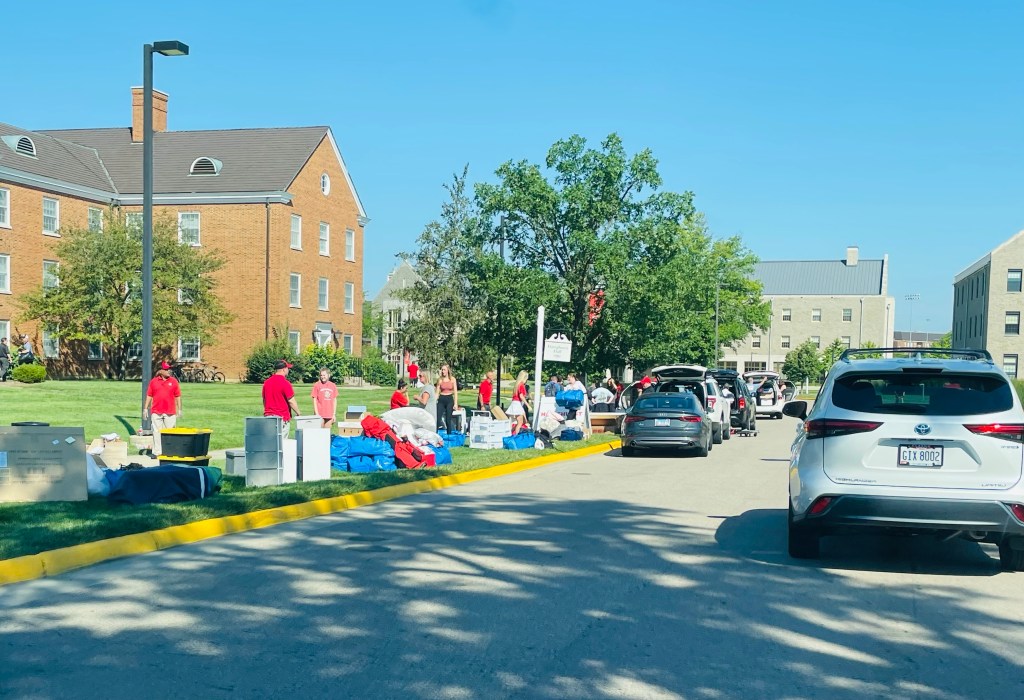
So you might understand how happy I felt when my Zoom yoga teacher in Ohio invited Ruth and me to show us around historic Miami University in her hometown of Oxford last Wednesday. For besides getting the chance to finally see her kind soul presence in person, I also looked forward to some nostalgic observance of the “buzz” excitement with undergraduate students welcomed back to campus before late August classes began. Looking back then to that morning of our Oxford visit, it seems that our gracious host seemed quite knowledgeable about the Oxford College experience and thus personalized our walking tour to make it freshly real.

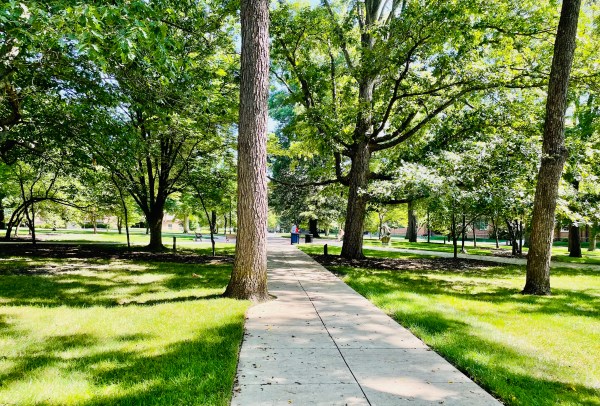
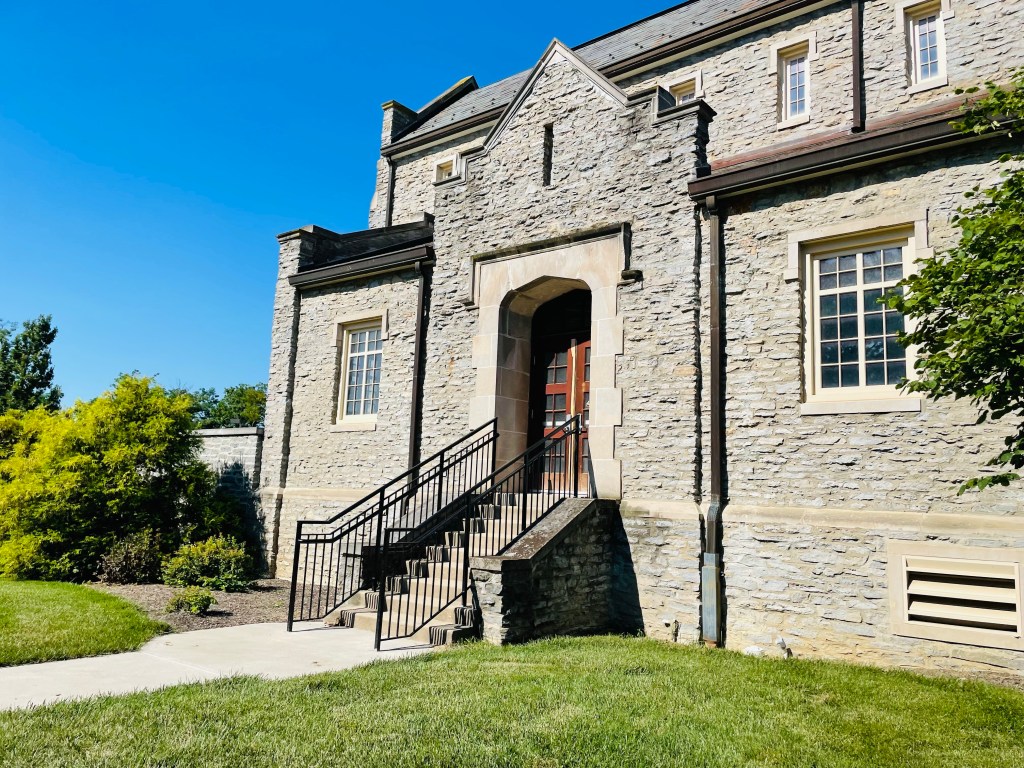
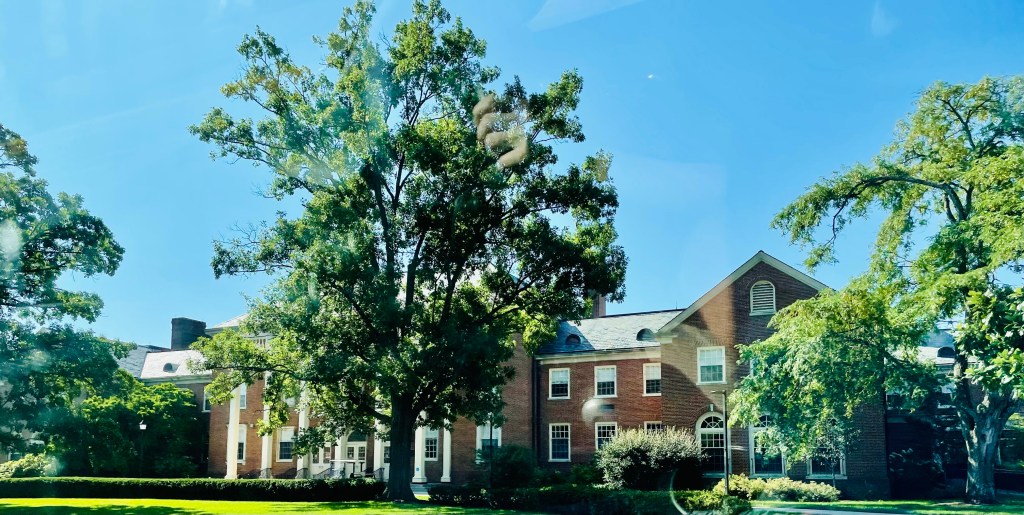
Certainly, I enjoyed the opportunity to photograph the many stately stone and brick buildings of learning at Oxford, some of which dated back to the early 19th century. But such iconic images of academia could be deceiving as I learned how the current trend of student self entitlement on campus might conflict with such strict adherence to such high academic standards seemingly projected here. I wondered then to what extent I once felt such pressure to indulge in self centered pursuit of fun rather than prioritizing course study time matters. Nostalgic memories of college further surfaced for me when our walk continued through open “greens” , some floral gardens and to a covered bridge. For I observed myself  daydreaming again as that ambitious student desperately needing to take time to find a similar campus oasis to get away from academic pressures and relax.

It also seemed important to me that our host did not shy away from showing us some controversy on campus. For as my own college days once resonated with strong anti- war sentiment during the Vietnam War, I could similarly feel why the prominent statue presence of George Washington at Oxford raised issues of slavery and human rights protest fever now. Our campus tour would then delightfully end with a bit of sports entertainment as our guide intuitively sensed my need to roam around the Miami University Football stadium, better known as the “Cradle of Coaches” Thank you my yoga friend for spending time with us today.

Dayton’s Dignified Duo

“ For some years I have been afflicted with the belief that flight is possible to man. My disease has increased in severity and I feel that it will soon cost me an increased amount of money if not my life.” (Orville and Wilber Wright)

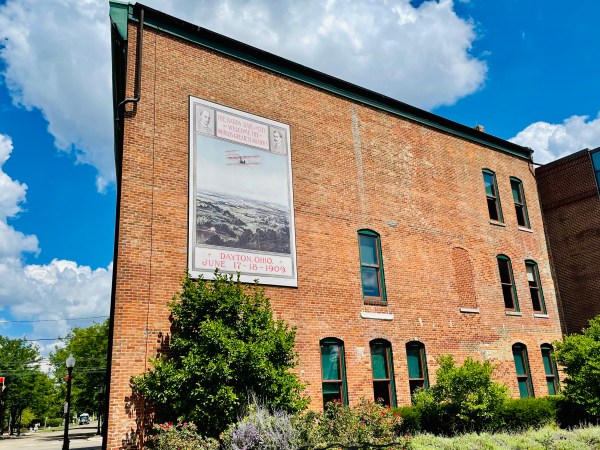
Ohio does not usually function as a tourist friendly place as one travels from town to town. However, with a sufficient amount of research at hand, plenty of interesting sites can be discovered at unanticipated times as you look around the the state on your own. In our case, we’ve reached the home stretch of our current summer adventure and will be making daily headway back to South Florida from Cleveland this week. Yet as we shifted more to the west as we began our latest route down to home, one particular site of historic interest traveling immediately caught my eye. Thus we decided to make a first time, side trip off off of Interstate 75 to Dayton Aviation Heritage National Historic Park. For I became curious to obtain firsthand knowledge of Orville and Wilbur’s aviation heroics in their hometown that inspired them to pioneer  the first powered airplane flight.

Taking a quick look at the National Park brochure, I noticed at least six different sites of possible interest around Dayton concerning Wright Brothers aeronautical interest that morning. Based on our travel schedule, however, we would limit our visits to only two of them as briefly described below.

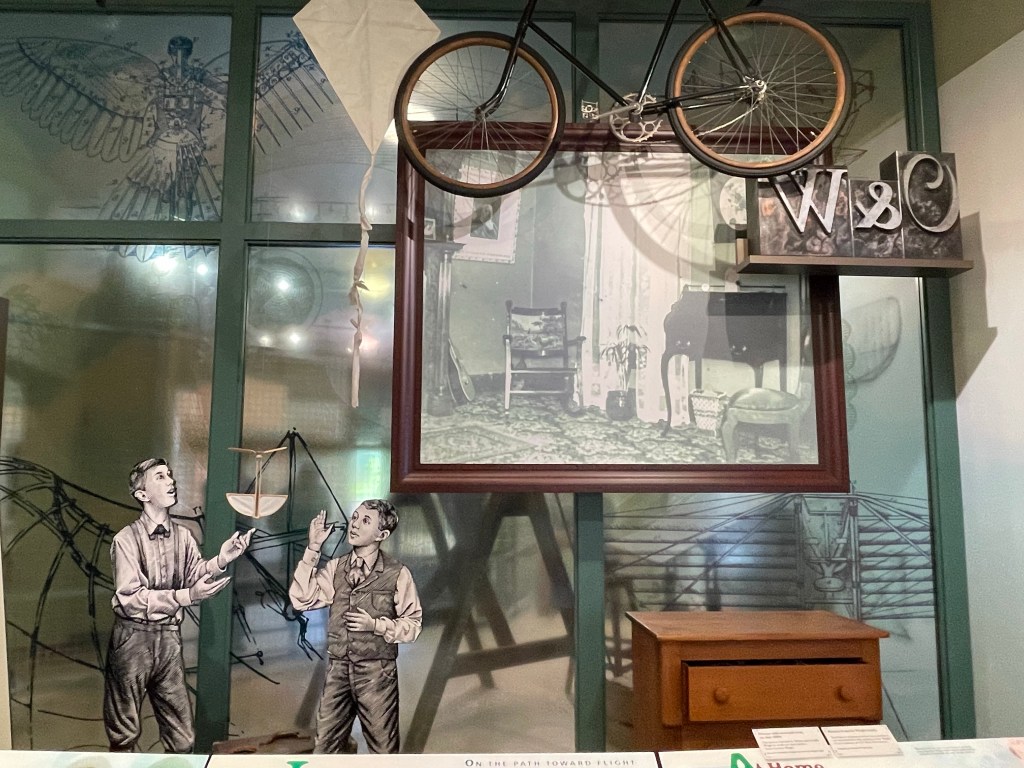
1) Wright- Dunbar Visitor Center – This exhibition documented the various phases of Orville and Wilbur Wright’s life with particular focus on their aviation work in the Dayton area. A separate area not included in this blog showcased the life and works of Dayton resident Paul Lawrence Dunbar, renowned poet of his times.

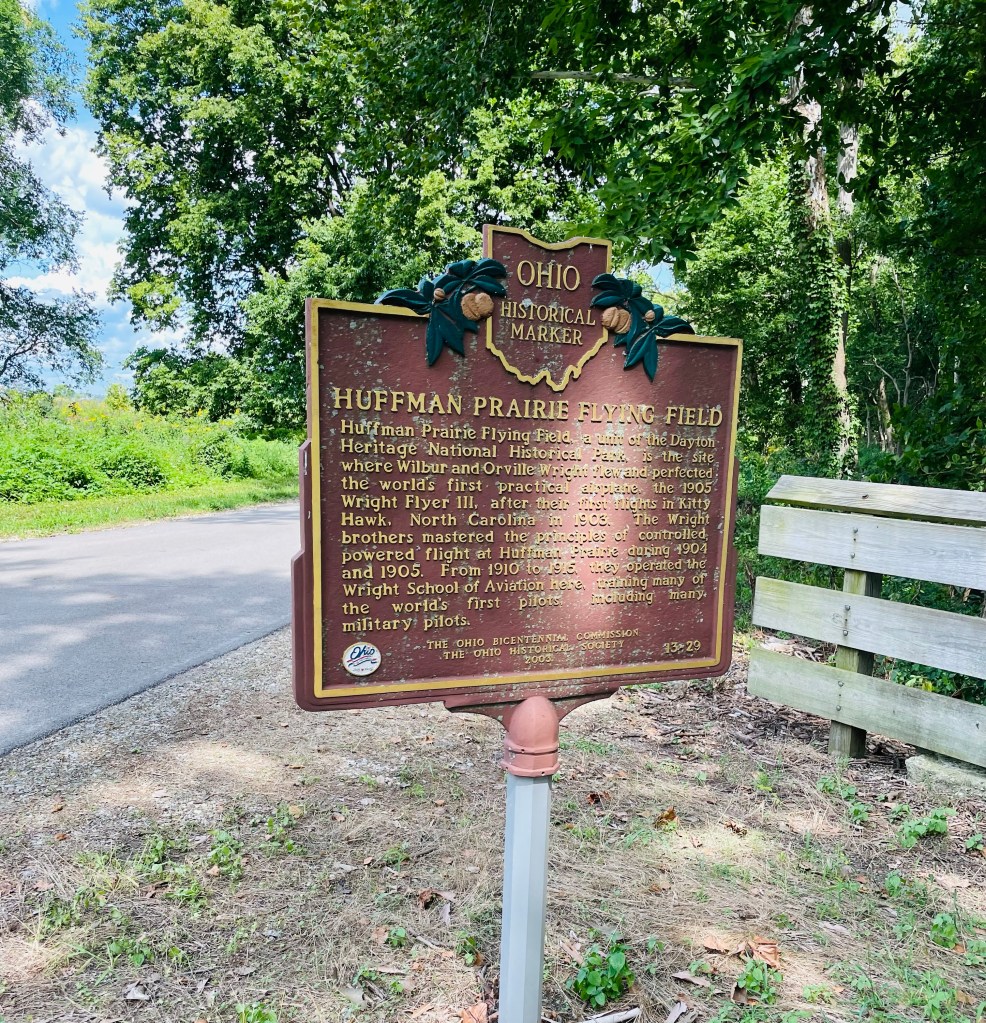
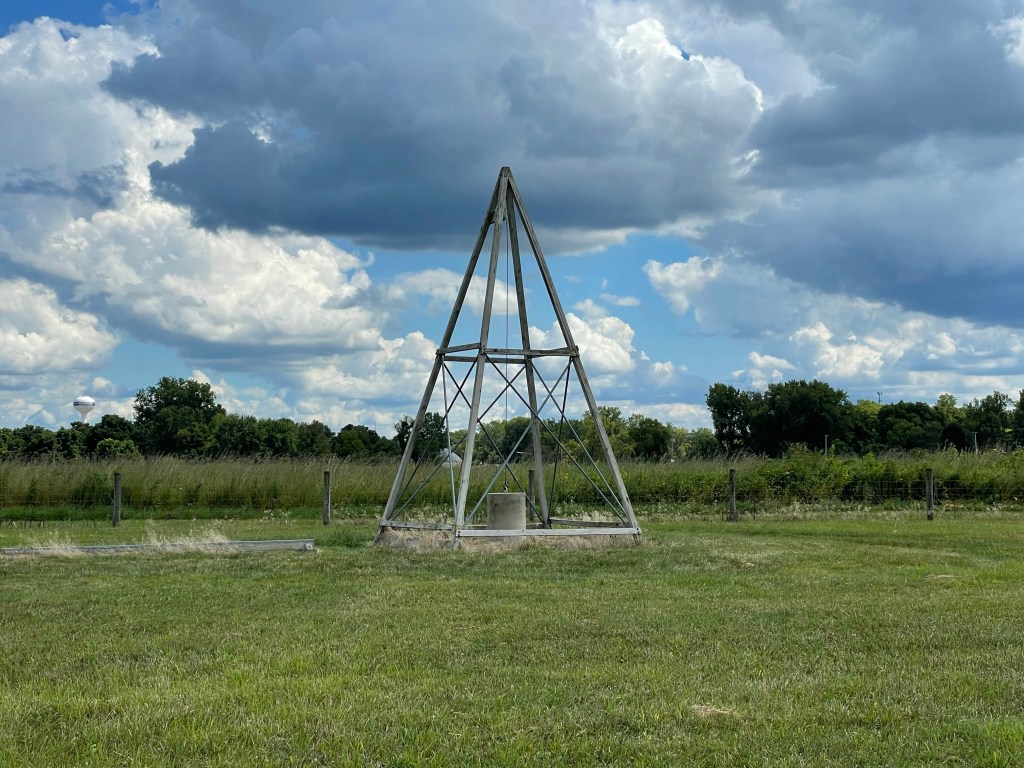
2) Huffman Prairie Flying Field -We walked around the actual grounds of a Dayton farm field used by the Wright Brothers to construct and flight test  their prototype flying vehicles. It’s considered by many as the first flight airstrip ever used for airborne travel. A reconstructed storage shed and catapult launching stand to assist plane takeoff mark the spot of this runway. 

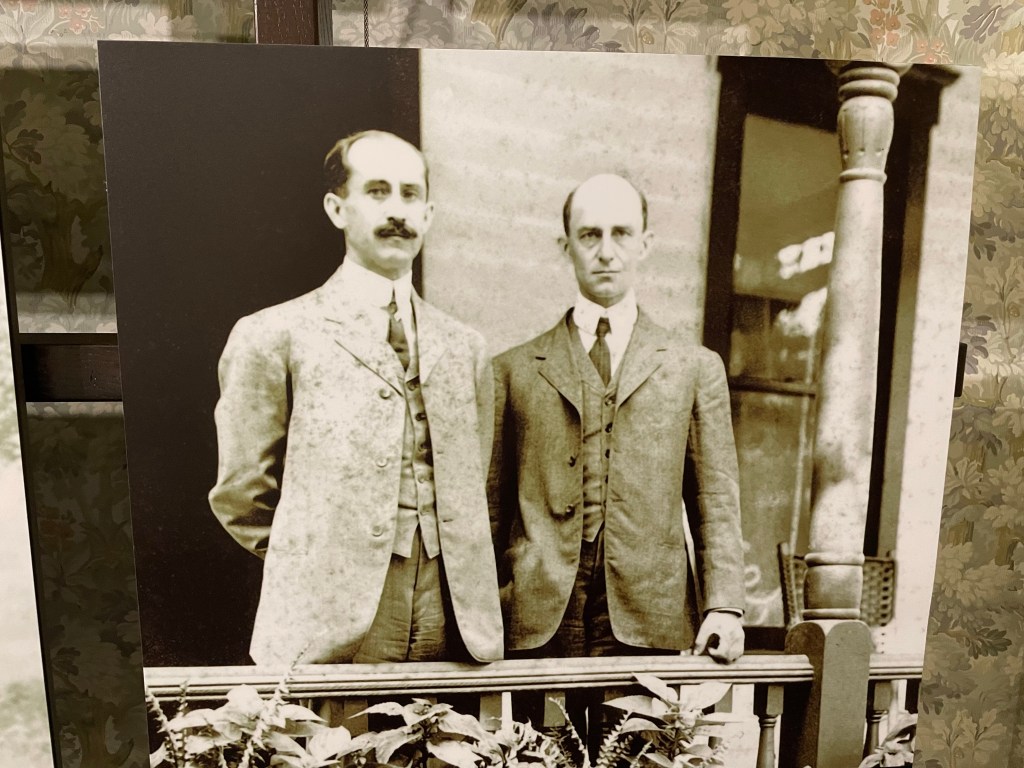
Now I invite you to read further below what I’ve learned about that the genius of Wilbur and Orville Wright with respect to mastering the technical science of airborne flight in a most readable fashion.

When you soar over the earth below in an airplane, imagine how a bird in your neighborhood similarly masters the element of flight. First it needs a sufficient thrust of air power to lift itself airborne from its flapping wings causing moving air to flow above and below their angle of ascent. Being airborne now, a bird’s wings as well as it’s tail now critically adjust to the wind to steer a path smoothly for them forward in the air. At other times, a bird can quickly alter its wing angle to change their directional movement of up, down, sideways, and reverse. At times, a birds can even glide effortlessly if the air flow currents striking their motionless wings are right.

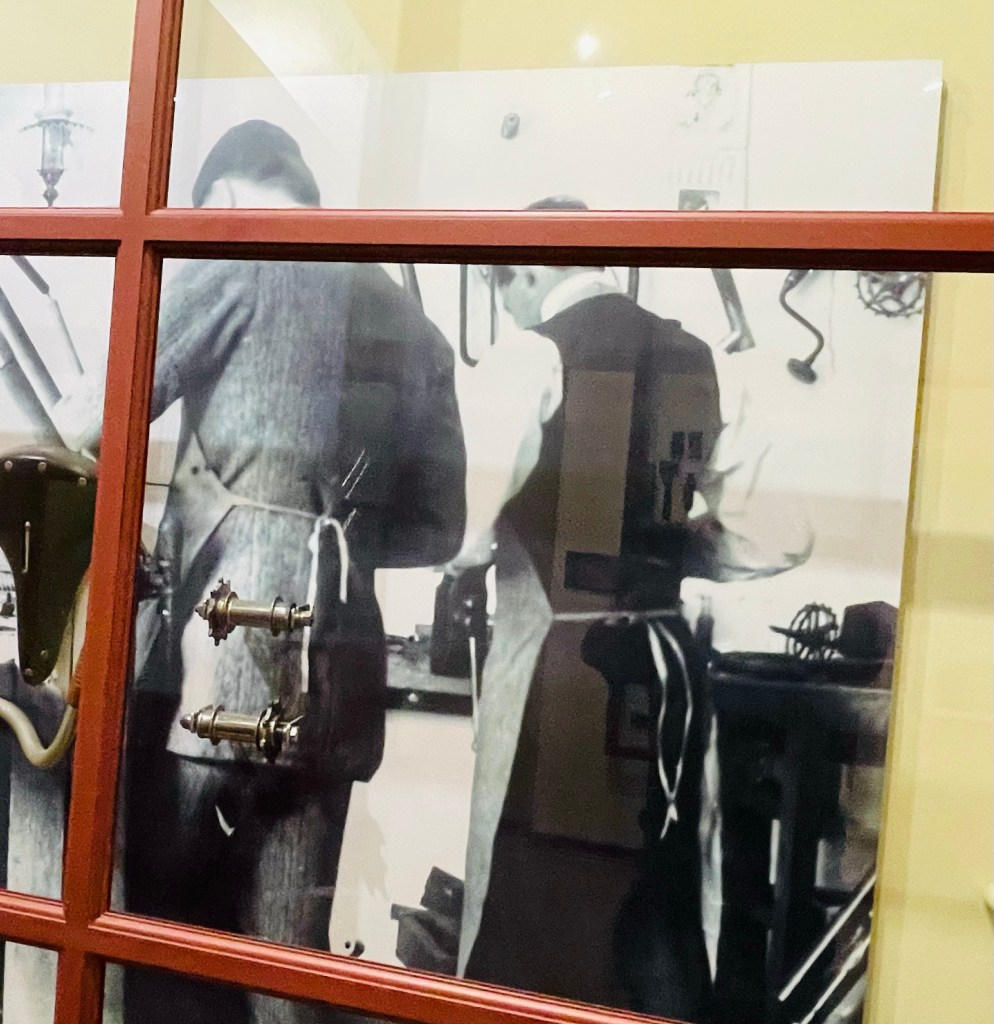
Such fundamental principles of thrust, lift, control, and power presented a formidable challenge for those who wished to build flying machines at the turn of the 20th century. But Wilber and Orville Wright , two young bicycle mechanics from Dayton, Ohio dared to fly like a bird as they tinkered around their shop with new airborne designs. When the brothers first sketched and then built simple gliders, they discovered how altering specific wing angles showed promise to rise and fall smoothly in the air. But from a practical perspective, they realized that true attainment of flight needed more than short, fleeting ascent from the ground So they built a small bi- plane, then added propellers and a small motor to further enhance their flying machine.

Although many people thought they were crazy to think that humans could fly in the air, they nevertheless began to test run their first airplane in a farm field near Dayton. Facing the uncertain prospect of flight crash failures and resultant pilot death, they stubbornly went back to the drawing board on many occasions to perfect a better airplane design. Moving their aeronautic operations to Kitty Hawk, North Carolina, Wilber and Orville on December 17,1903 they finally showed the world that their daring experiment of this mechanical bird could work. For although this first Wright Flyer lifted off the ground, lasting merely twelve seconds, a revolution in air flight travel now began. This event marked the first time in history that a motorized airplane heavier than air had flown successfully.

Galena’s Gallant Hero

“Fight for the things that you care about, but do it in a way that will lead others to join you.” (Ruth Bader Ginsburg)

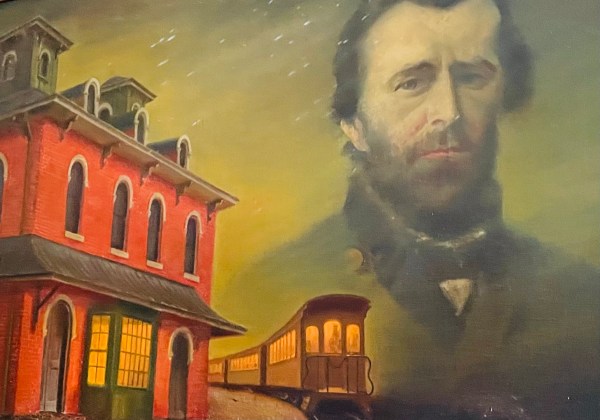
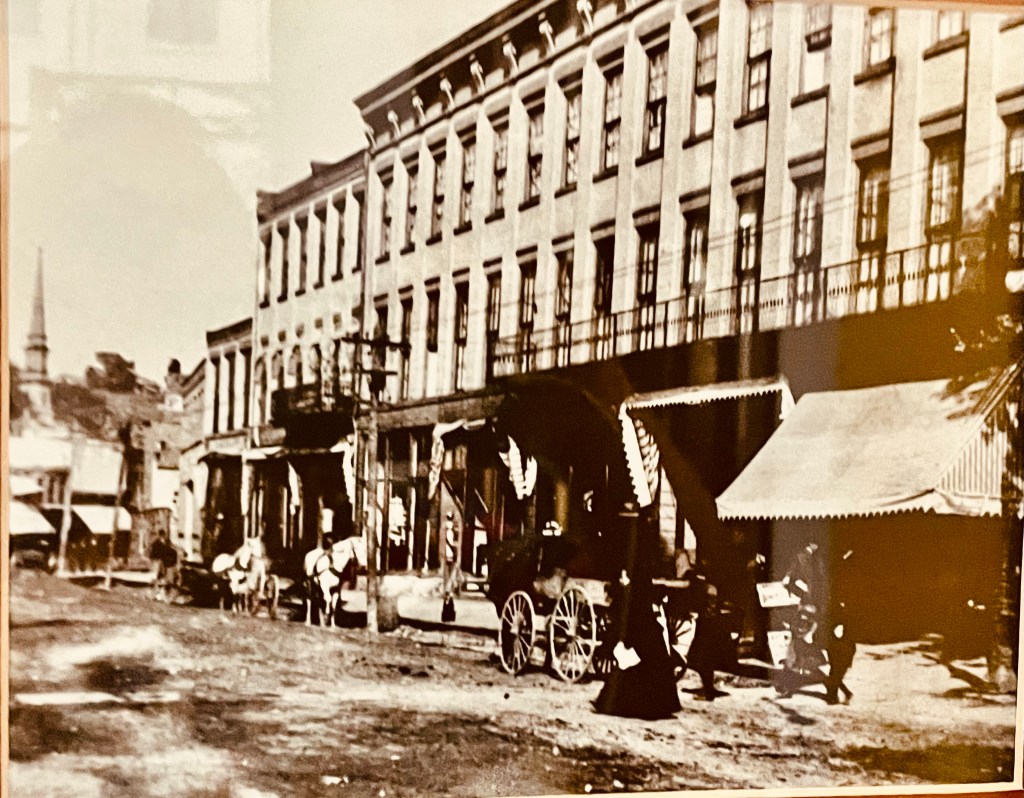
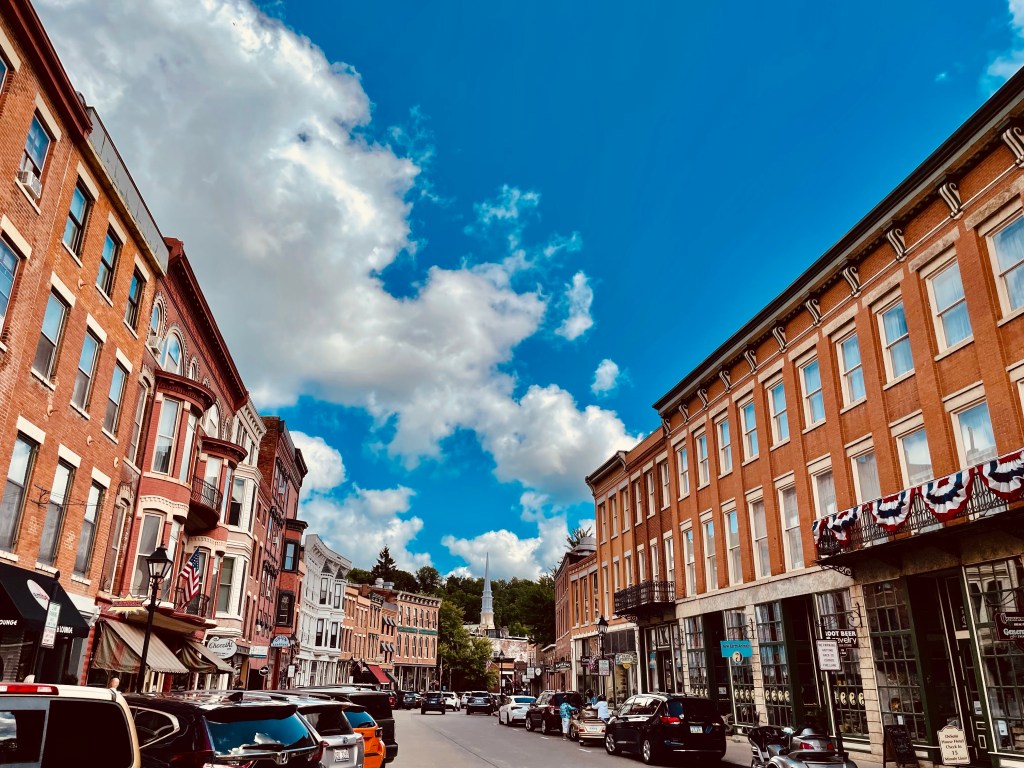
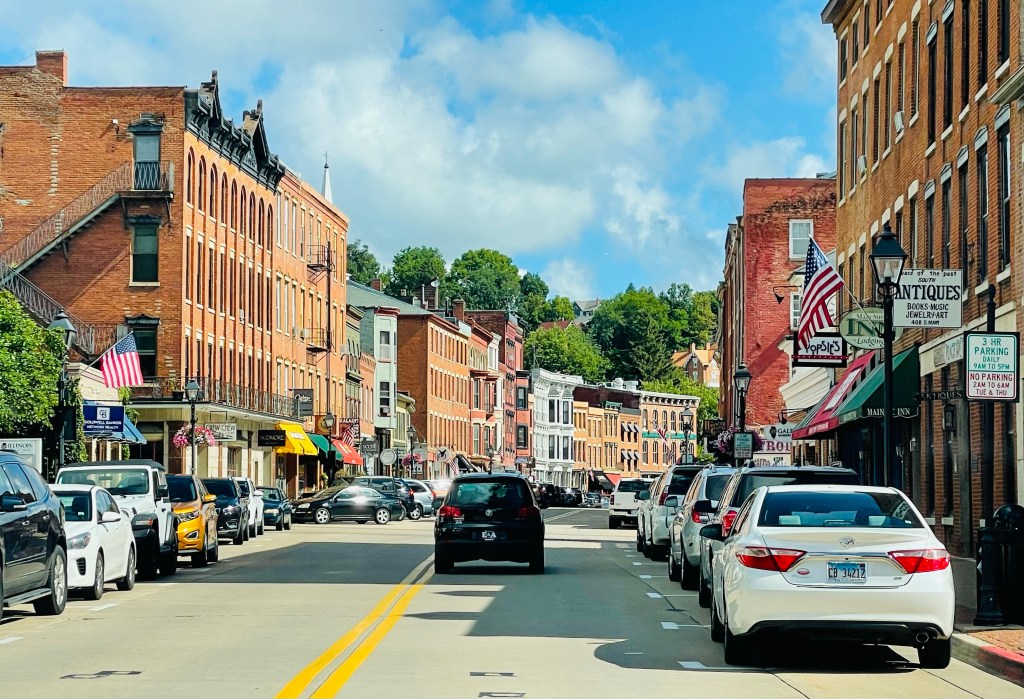
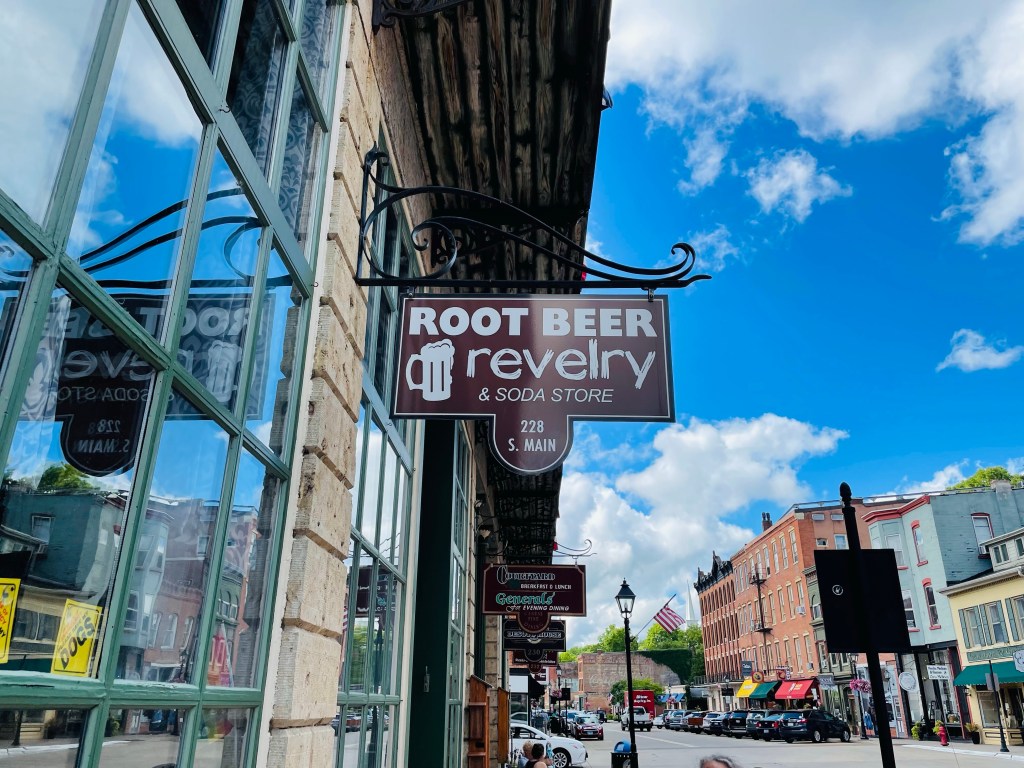
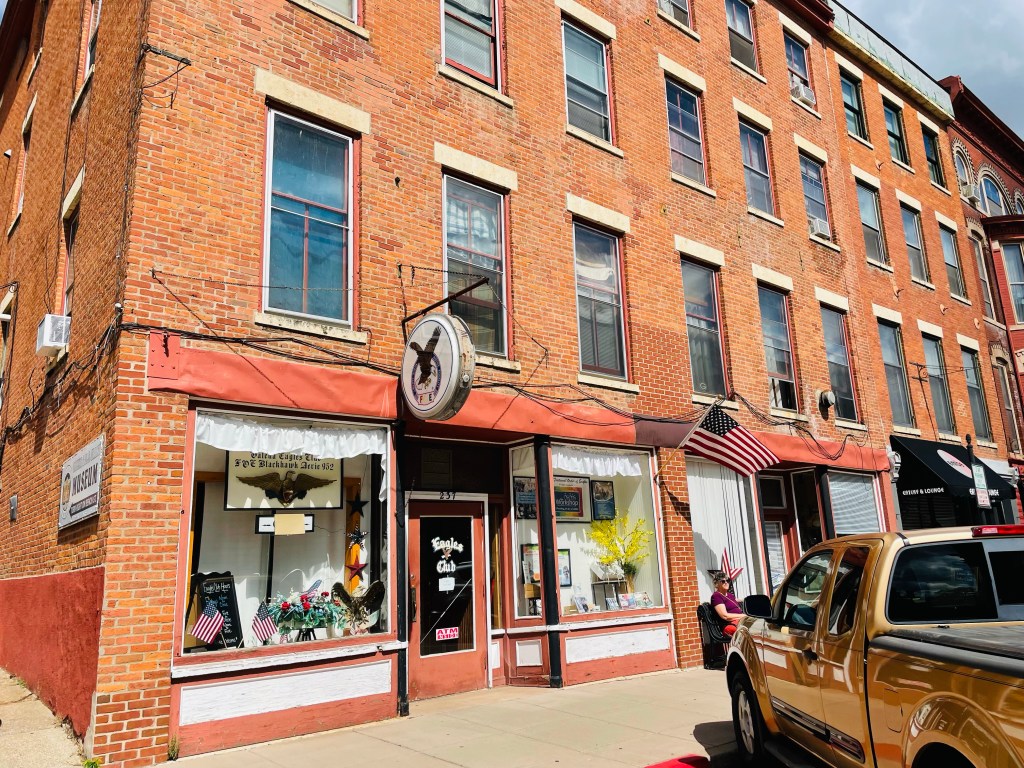
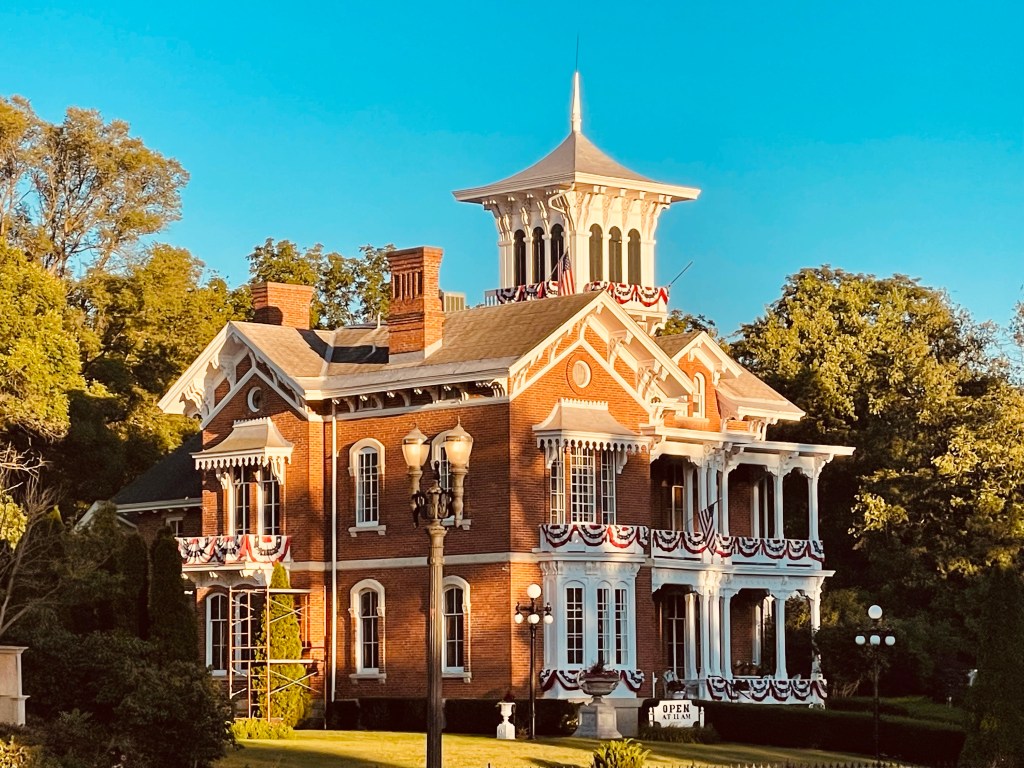
When we first entered the steep hillside town of Galena, Illinois for a two day stay, I immediately sensed along Main Street an “All American” tribute to their past resident hero, Ulysses S. Grant. Know that Galena’s “town fathers” presented Ulysses with free ownership of his previously rented, brick house on top of a hill overlooking town to honor his victorious Civil War leadership and later successful run at the U.S. Presidency. This modestly built abode, would serve as the official residence for the Grant family from the Civil War start to his Presidency and throughout the bulk of his retirement years. Aside from the vehicles parked along this street, my first glance on our mid-morning walk through downtown, revealed an authentic historic preservation effort here with rows of antique shops, friendly taverns, as well as a large hotel still standing from the 19th century era. At various points along this “Old Town” tour, I also took time to admire the impressive display of flags and banners revealing red, white, and blue patriotism in remembrance of Grant’s legacy as their local homegrown hero. .

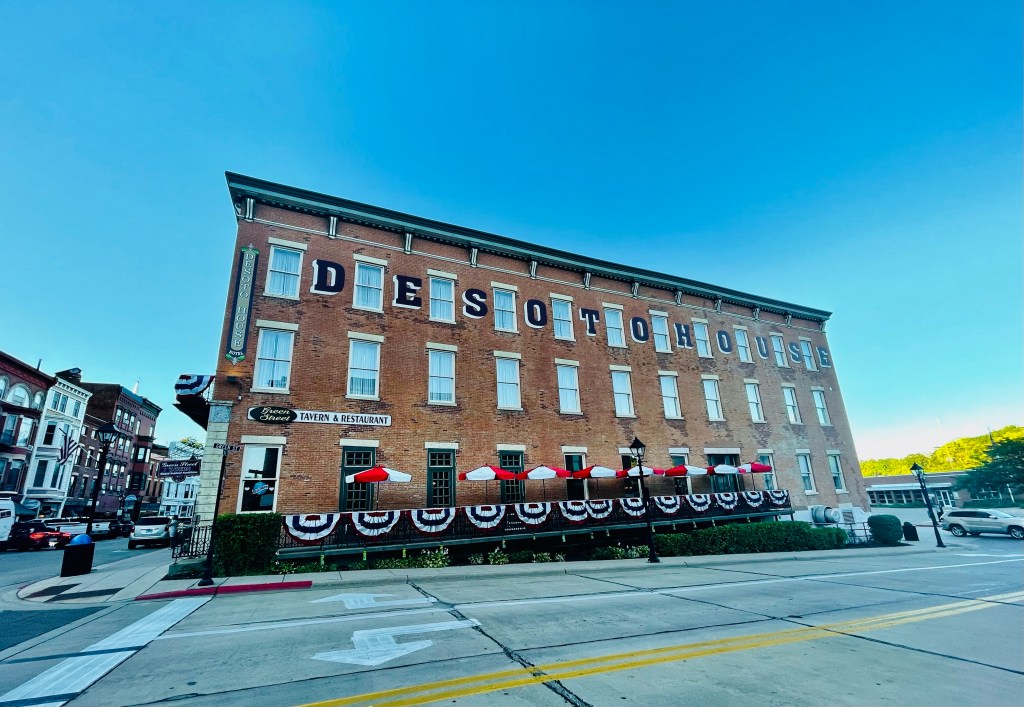
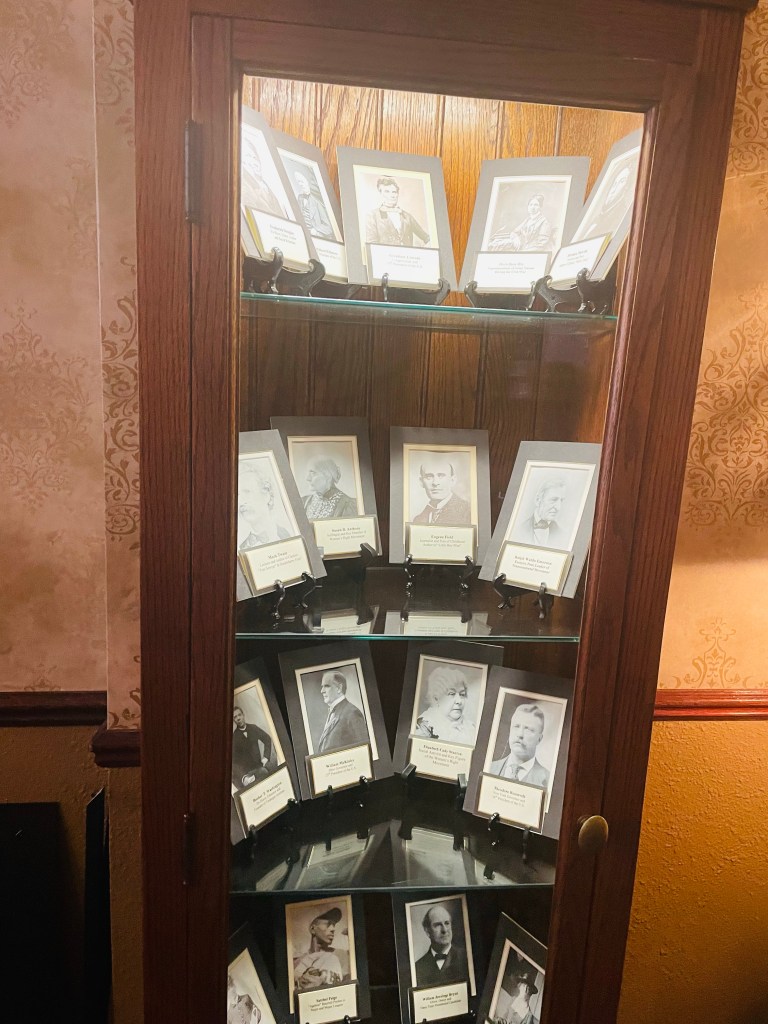
Among the most prominent discoveries during our Galena visit took place at the DeSoto, the state of Illinois’ oldest operating hotel operating from 1885 to now. Most impressively, our brief look at it’s guest lobby and front desk area yielded fascinating, old photographs of American heroes who once stayed in the “grand” rooms of the De Soto when it functioned as a major hub of social and political life in the town one time. In this regard, Abraham Lincoln made passionate anti- slavery speeches from the DeSoto balcony during his pre-election campaign while Mr. Grant similarly chose the De Soto as his political party headquarters during his successful run for the U.S. Presidency. After a period of physical decline to the building, the city of Galena took the initiative to successfully restore the “grand” DeSoto to its original appearance on a more modest scale. A short drive to the residential side of Old Town ended our first day in Galena with some stunning views of Victorian period residences abutting Galena’s steep interior hills.

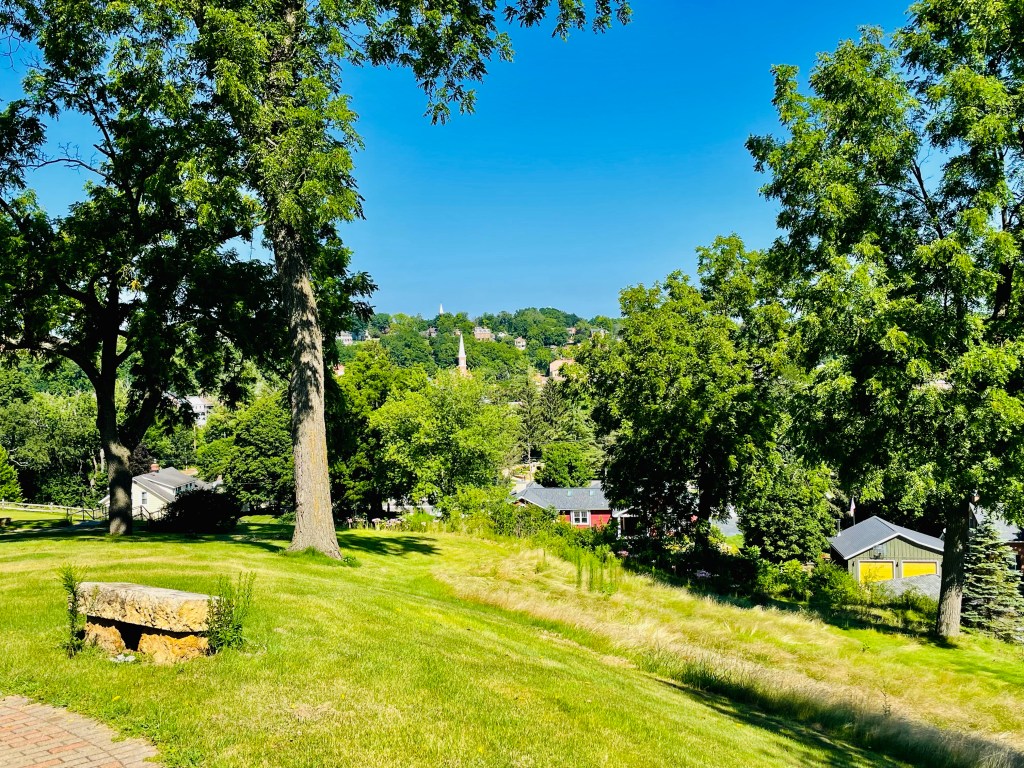
Our final stop on our Galena tour took place the next morning as we traveled a mile or so outside of town to the original Grant residence. We then took a twenty minute, guided tour of the house interior followed by a brief walk outside along these hillside grounds. For such an idolized figure in American History, I thus recognized Ulysses, for all his fame, as one who chose to lead a modestly simple life amid the privacy of his home with Julia, his wife, and his children. When we exited onto the grassy hill beyond the Grant home, my thoughts about Mr. Grant somehow intuitively deepened. For I pictured the ghost of Ulysses now slowly walking outside of his home, enjoying some fresh, cool air and a satisfying smoke of his famous cigar. A smile now appeared on his bearded face as he then gestured downhill while he overlooked that spectacular vista of the town. For he recognized then that he not only won the war and the Presidency, but he’d also captured the hearts of the townspeople in this place he loved so deeply.

Mississippi River Magnificence In Motion

“The river itself has no beginning or end. In its beginning, it is not yet the river; in the end it is no longer the river… At what point in its course does the Mississippi become what the Mississippi means?” (T. S. Eliot)

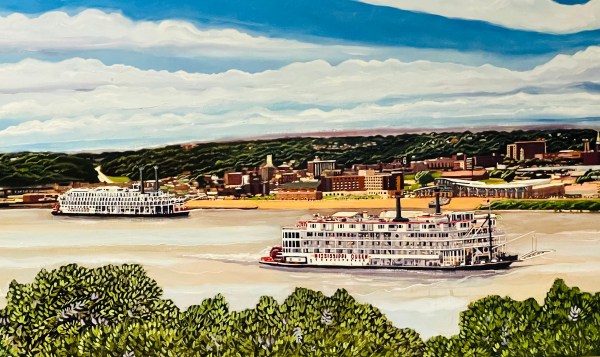
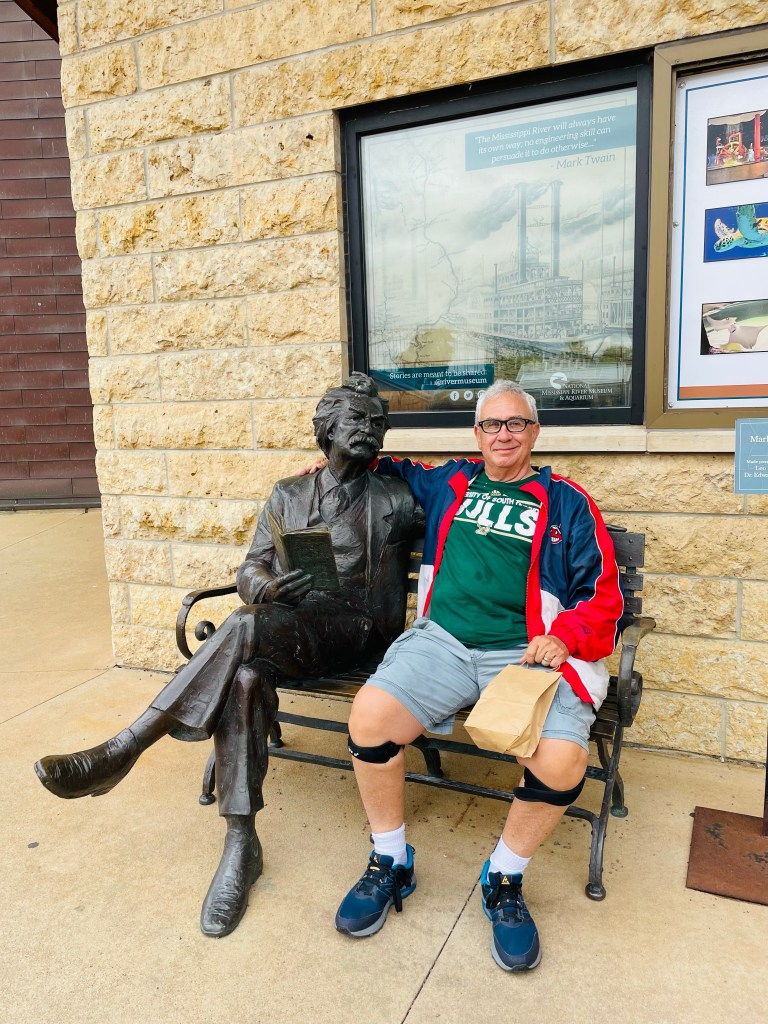
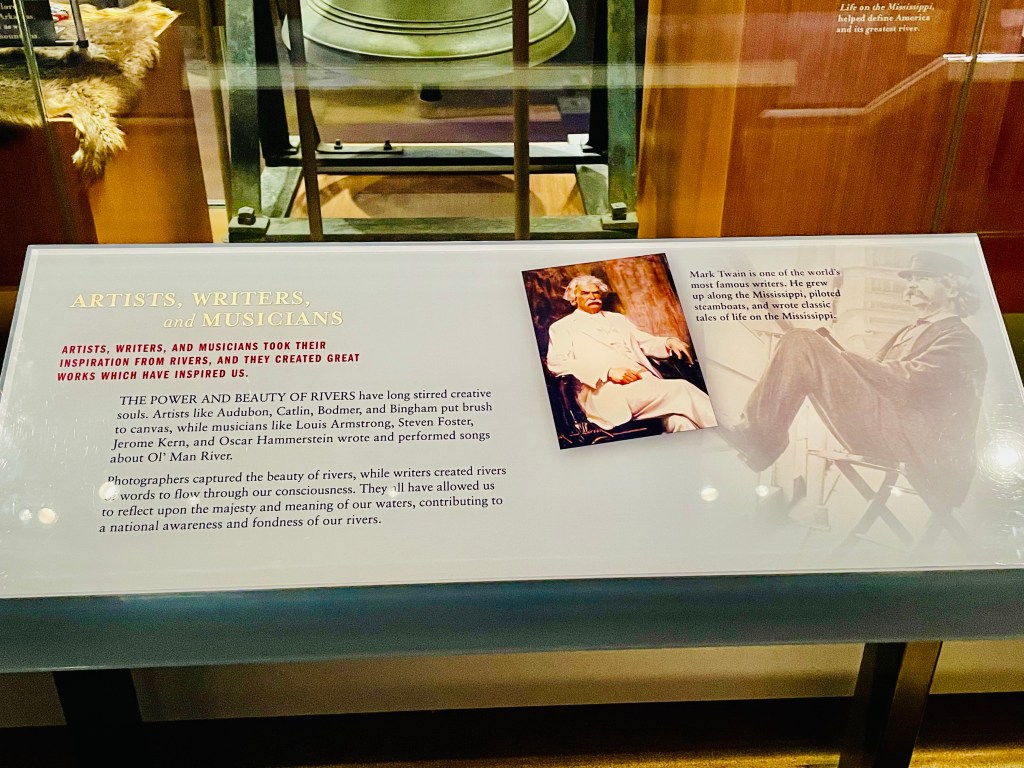
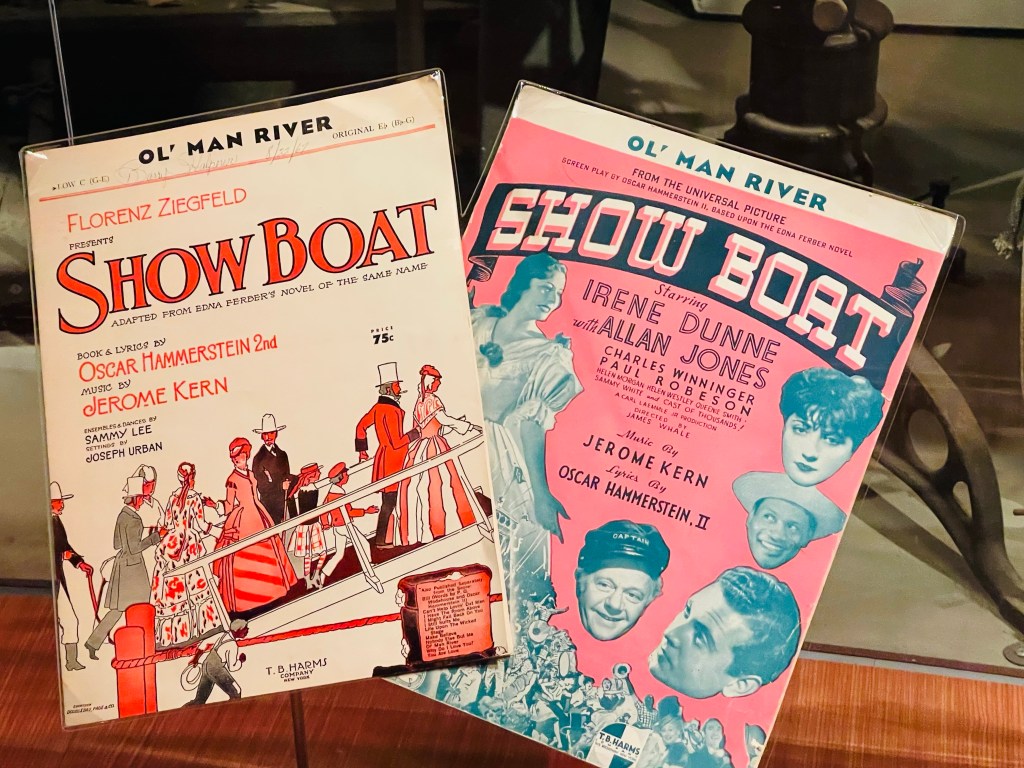
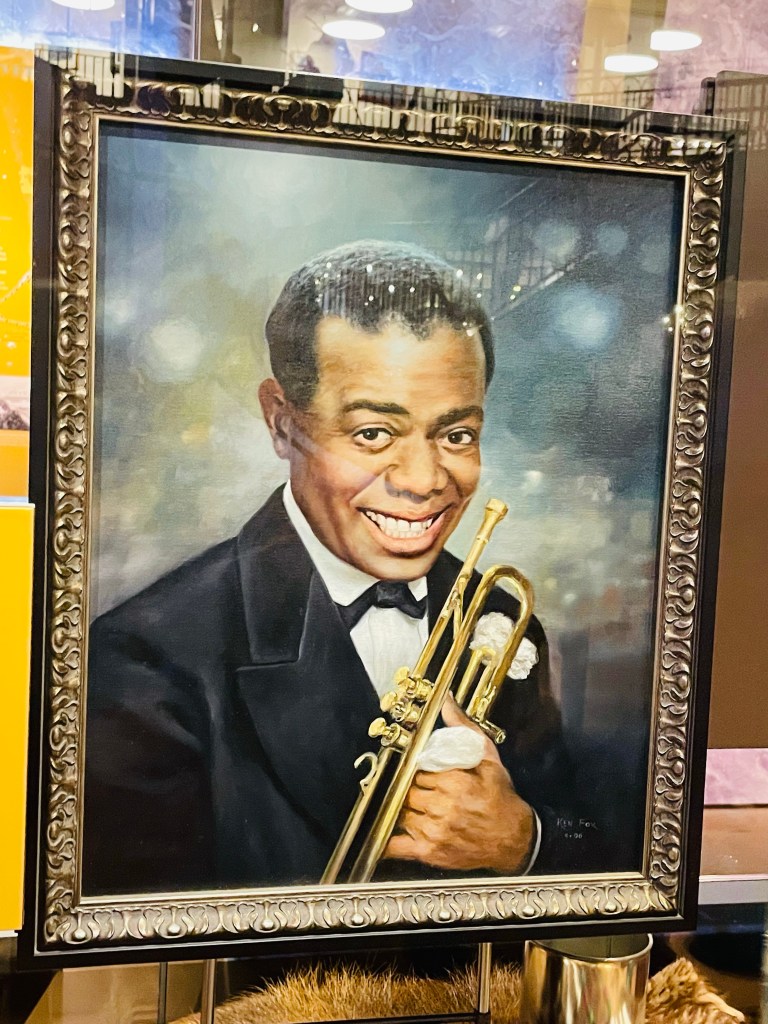
What does the Mississippi River mean to me from a road trip perspective? First of all, it marks a clear natural boundary where we leave more familiar grounds of populated eastern region settlement for the more wilder regions of the American West. Accordingly, I seem to transition in spirit after crossing the great river from a leisure centered tourist with pre-programmed sightseeing ways into a free roaming vagabond from pioneer days past. This Mississippi River border perspective also provides some tantalizing river cities of interest to stay for awhile before we proceed onward into more rugged terrain. In this regard, I immediately think of three favorite towns we’ve visited before. There’s Vicksburg, Mississippi often depicted as the turning point battle site of the Civil War, Hannibal, Missouri so nostalgically filled with Mark Twain’s literary world, and New Orleans where the Ol’Man River inspired musical jazz and blues artistry of a uniquely American style. I might add to this list  the old cliffside town of Dubuque, Iowa, where we’ve wandered into on our present adventure  in search of more pleasant moments of riverside discovery.

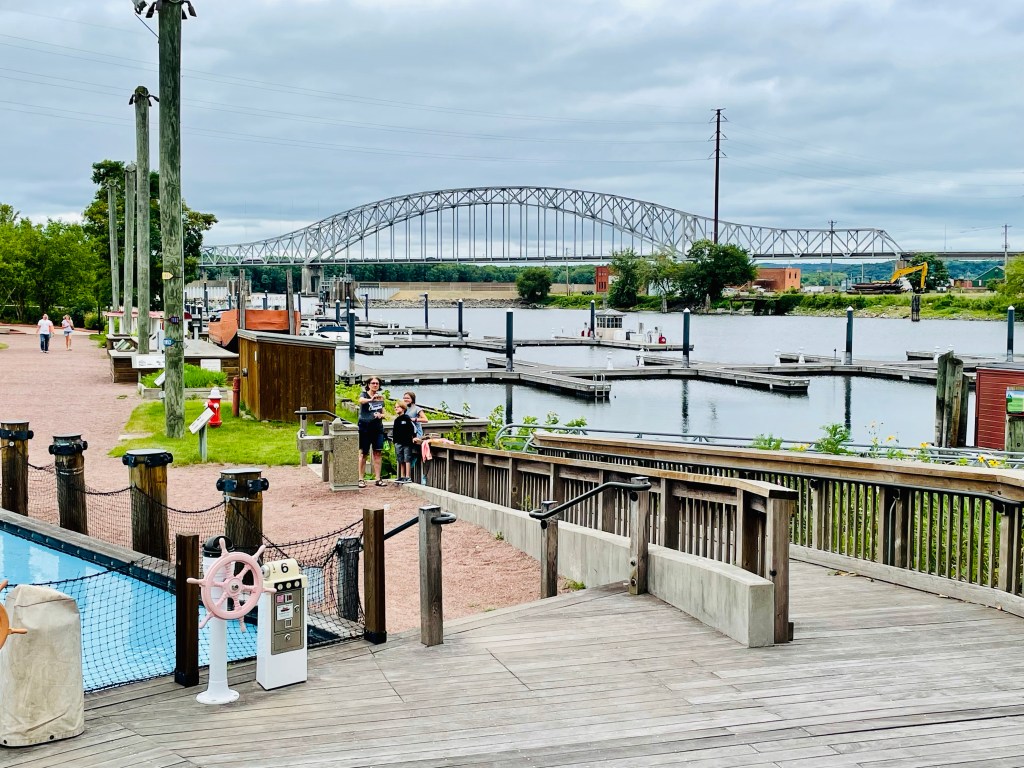
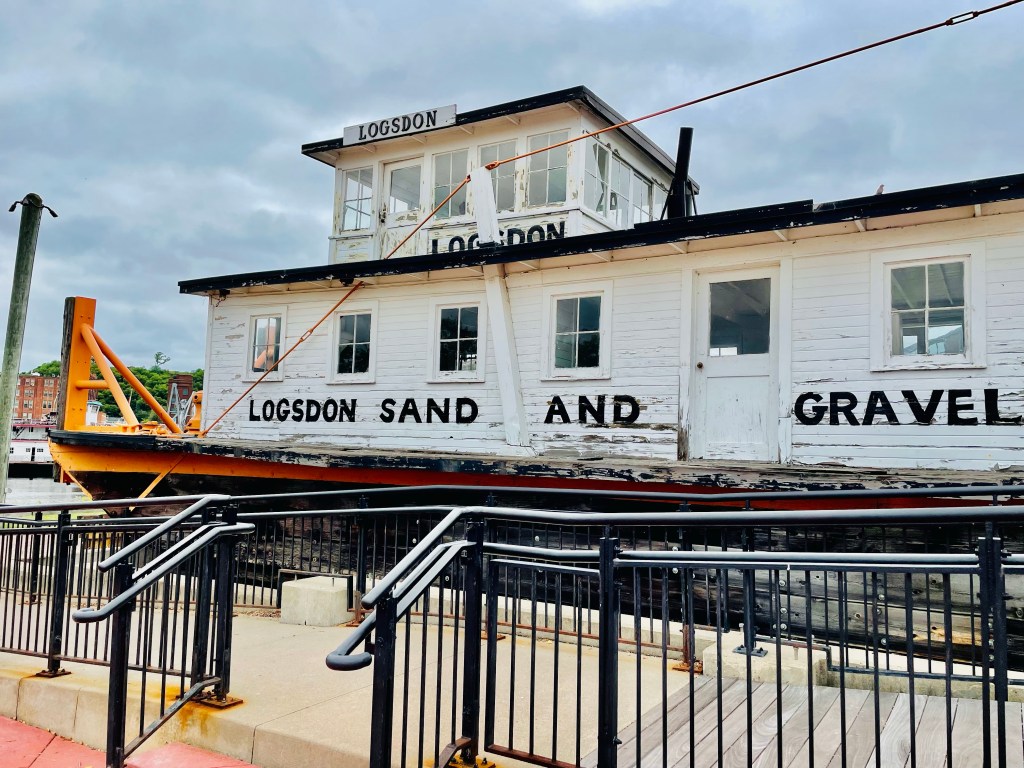
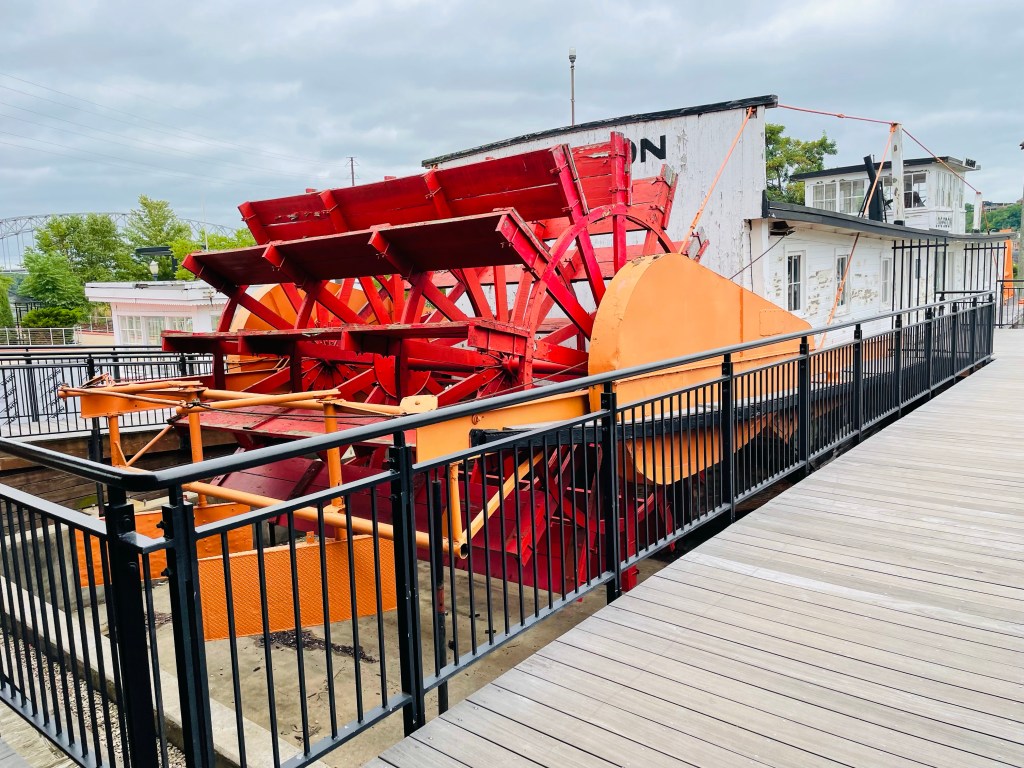
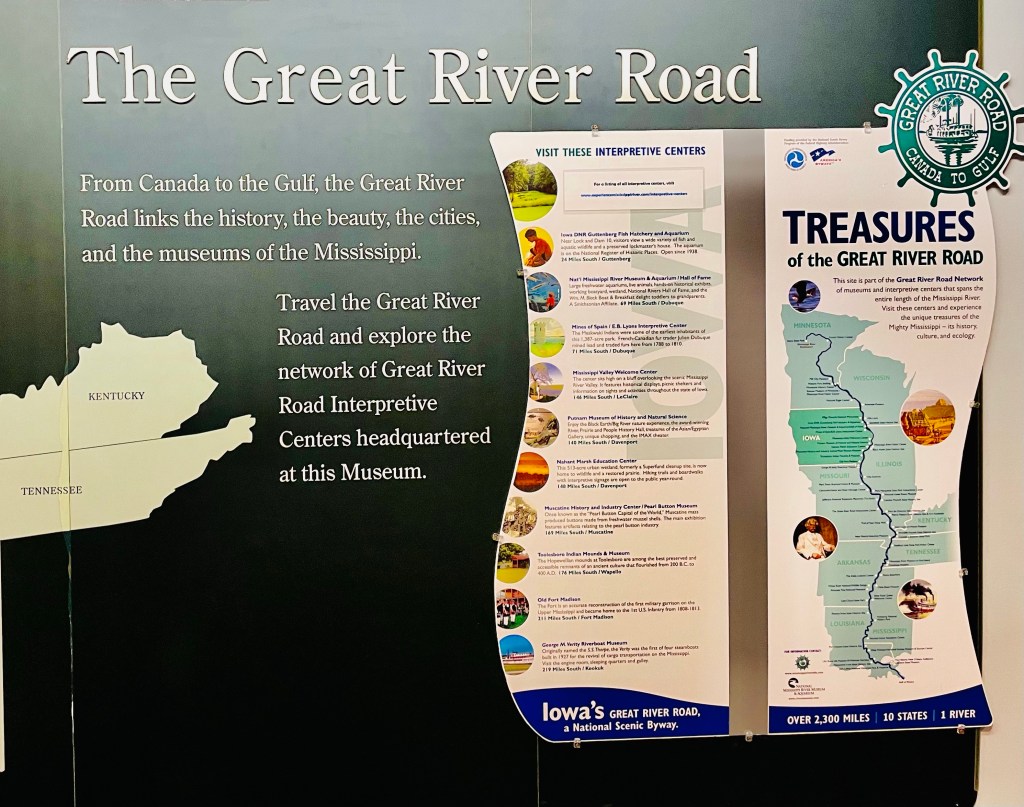
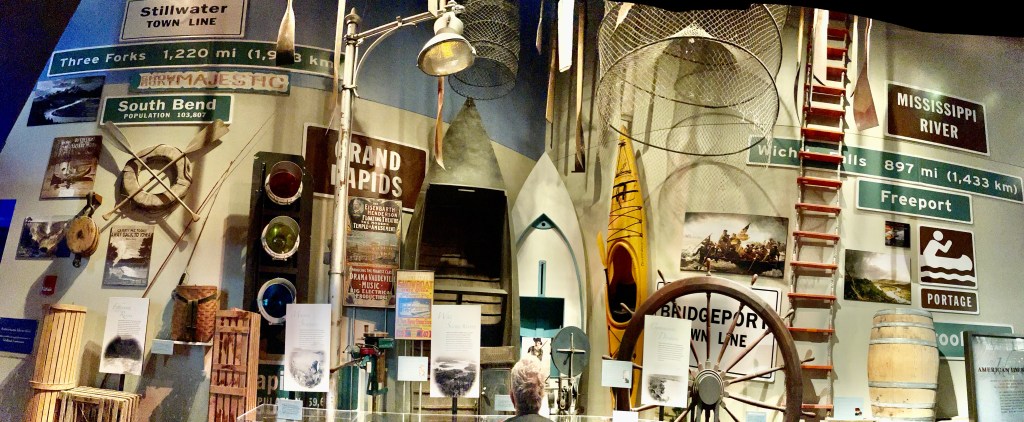
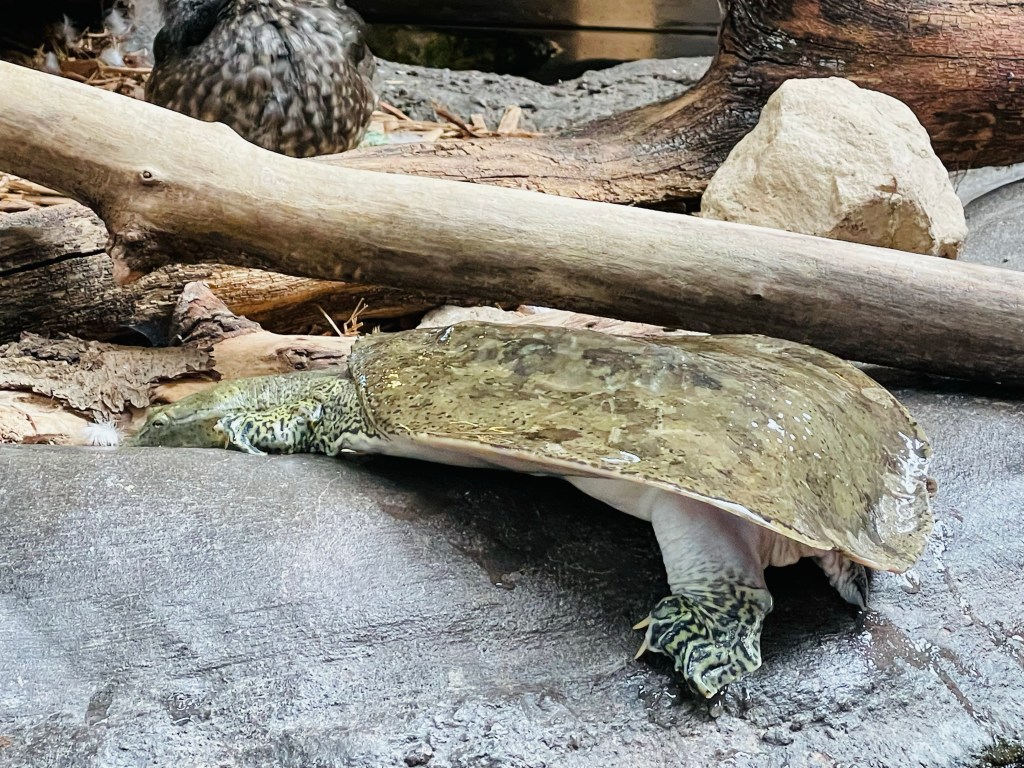
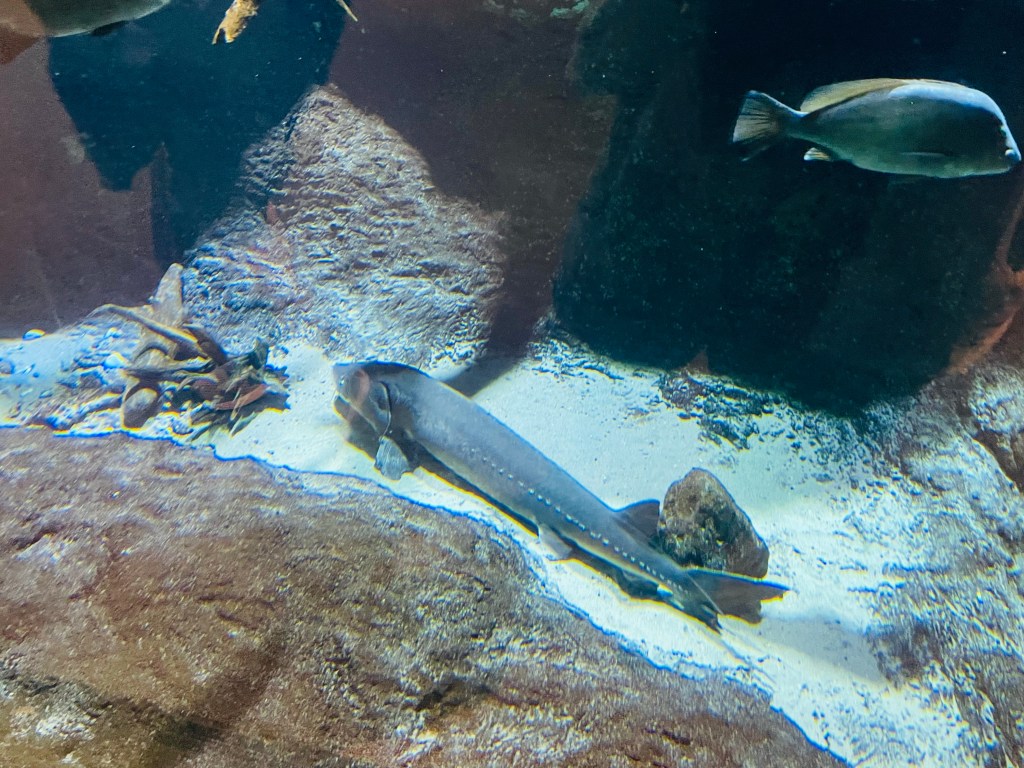
Yet I now realize that my road trip focus about the Mississippi River has  changed. For during our recent visit to the National Mississippi River Museum and Aquarium in Dubuque, I now question how my past fixation on what’s beyond the Mississippi River has ignored the presence of the river itself. Know then that the innovative exhibit design of this massive two building complex and aquarium provided ample opportunity for me to experience the sensory sights, sounds, and touch of realistic river life scenes stretching from early explorer days, through the flourishing steamboat era into busy cargo and tourist traffic times today. I thus found particular enjoyment in observing relics of old steamboat and fishing vessels, feeling the smooth surface of a stingray in a “touch tank” and composing a river inspired song using an interactive sound screen.

One might surmise from my previous descriptions that the “mighty Mississippi” survives as an indestructible natural phenomenon in today’s world. But how wise a decision had been made to construct so many historic dams and locks along its course that interrupted the natural course of flow of it’s muddy waters? For the Mississippi River suffers today from excessive riverbank erosion and flooding, serious buildups of toxic chemicals,, as well as excessive silt and sand buildup on its river bottoms. So I might reason as the fragile Mississippi flows on its downstream course with resilience from its riverless source to its end at the sea, I must accordingly learn to weather the “ups and downs” of my mere mortal existence with tenacious spirit in the present moment while I can.

Finding My Summertime Bearing

“ Summertime and the livin’ is easy.” (Porgy and Bess)

Those warm days of summer typically signify a festive explosion of outdoor activity in the Midwest region of America. For I recall from my childhood in northeast Ohio how restless I felt being cooped up inside our house during the frigid wrath of winter and sometimes spring weather that often lasted up to six months a year. So with true summer’s arrival in July and August, our Midwest travels on this current road trip allowed me to re-live those easygoing childhood moments filled with lush forest hikes in the Cuyahoga Valley, swimming escapades in Summit County lakes , and Cleveland Indians  baseball games at old Municipal Stadium.


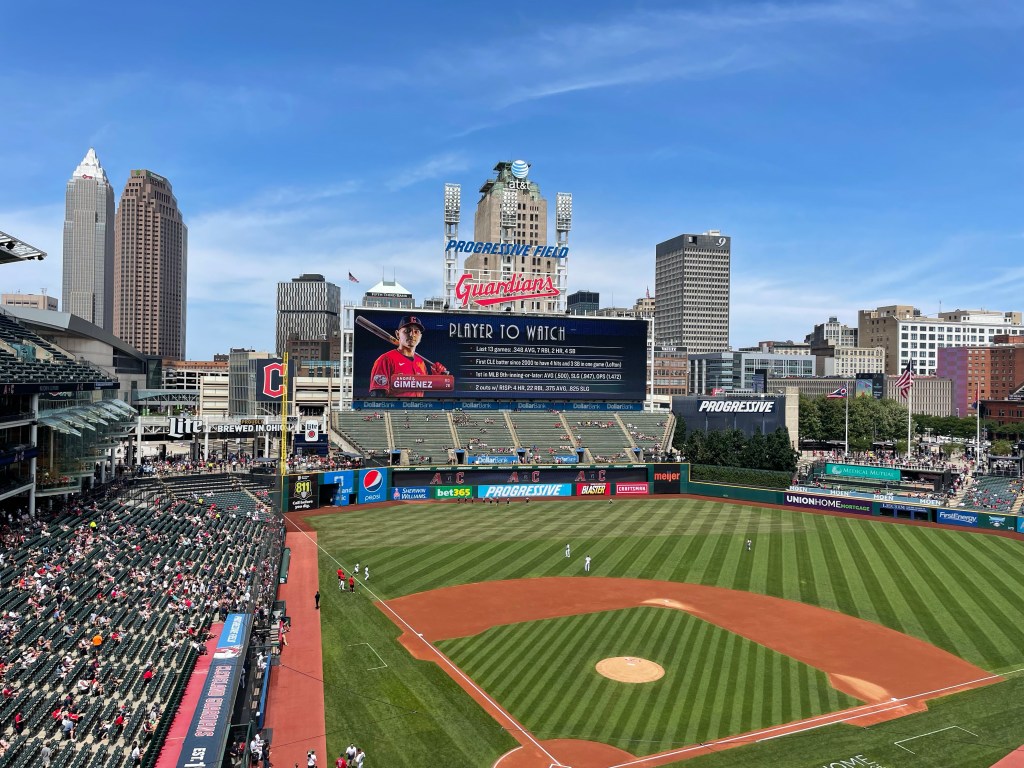
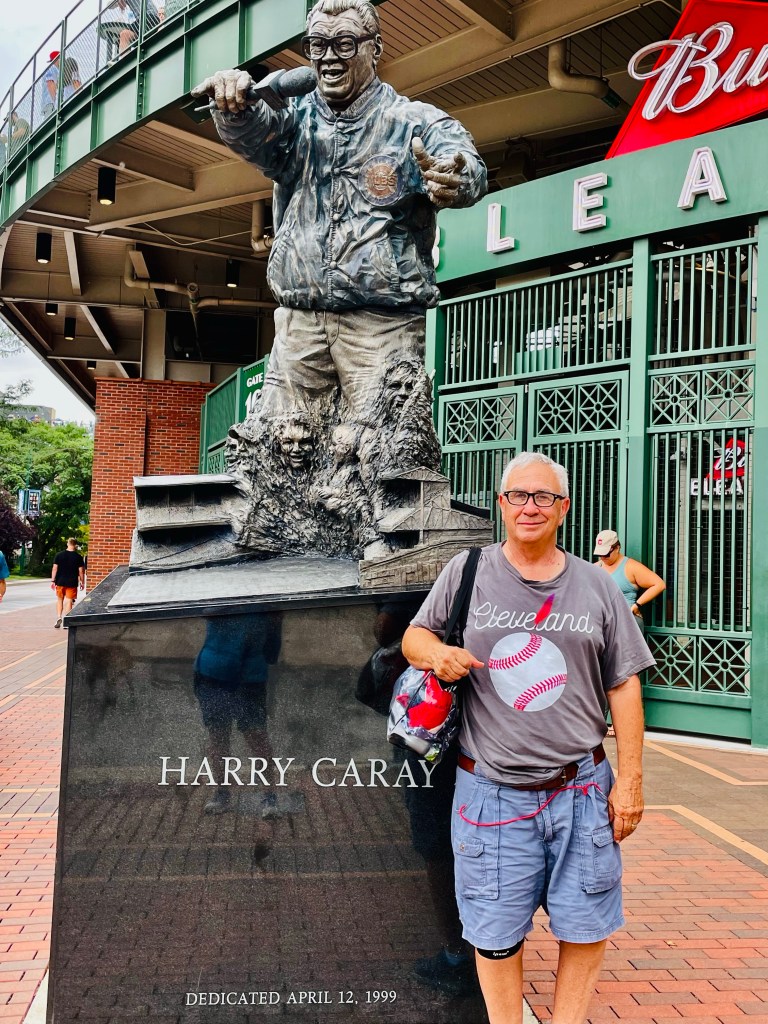
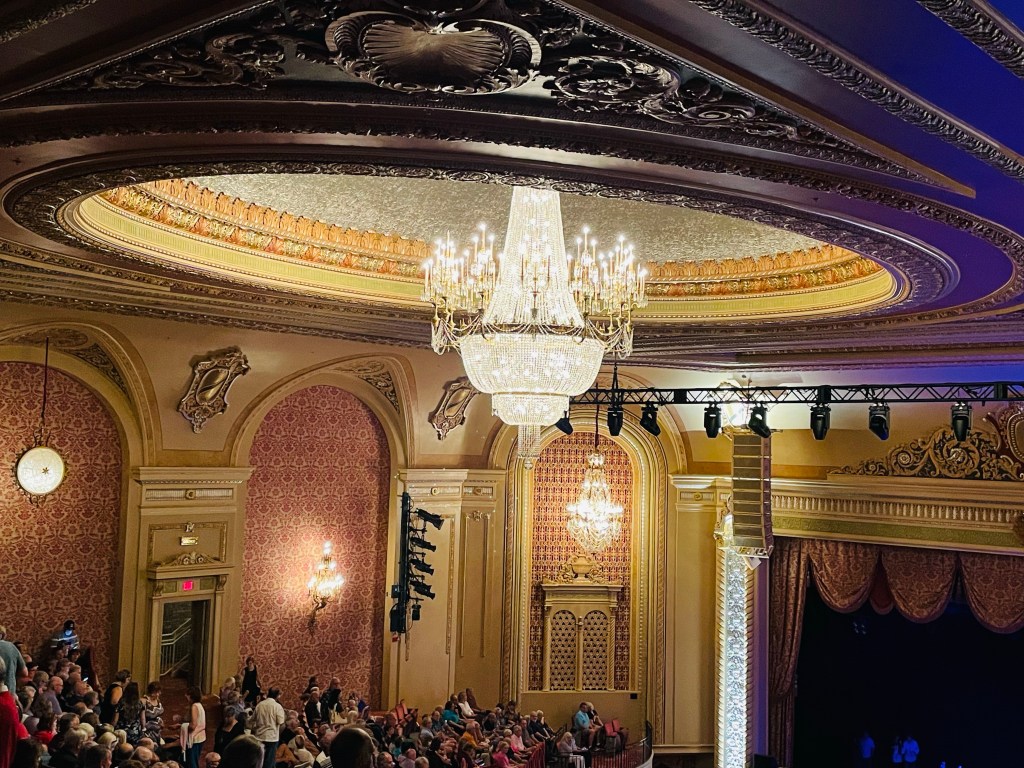
I might say then that the westerly leg of our road trip so far since leaving Pennsylvania has brought forth an interesting array of relatively inexpensive recreational discoveries for us to enjoy. Consider then that by simply taking a “comfy” seat for a Cleveland Guardians baseball game at Progressive Field and two days later at a Chicago Cub game at Wrigley Field, the slow pace of each contest felt so relaxing to me. Or envision the nostalgic thrill of aimlessly observing the local flora and fauna along  a secluded, beachfront reserve walk followed by a refreshing swim in the cool waters of Lake Michigan at Indiana Dunes National Park. With such a fun loving vibe inspiring us now, it made total sense then to dance and sing along this past Saturday night with some legendary “oldies” bands ( Gary Puckett, The Association, The Turtles … ) at a concert titled “Happy Together” that we attended at the historic Genesee Theater in Waukegan. Illinois.

Pennsylvania’s Field of Honor

“ There are heroisms all around us waiting to be done” (Arthur Conan Doyle)

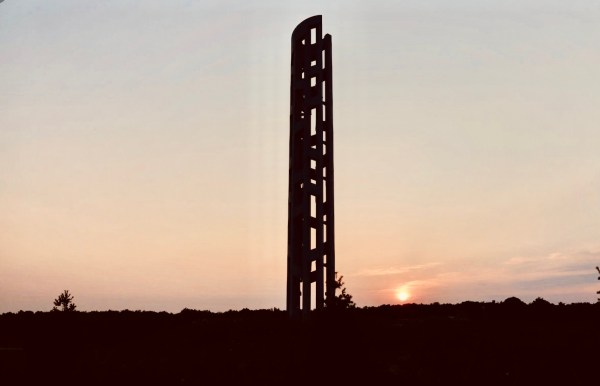
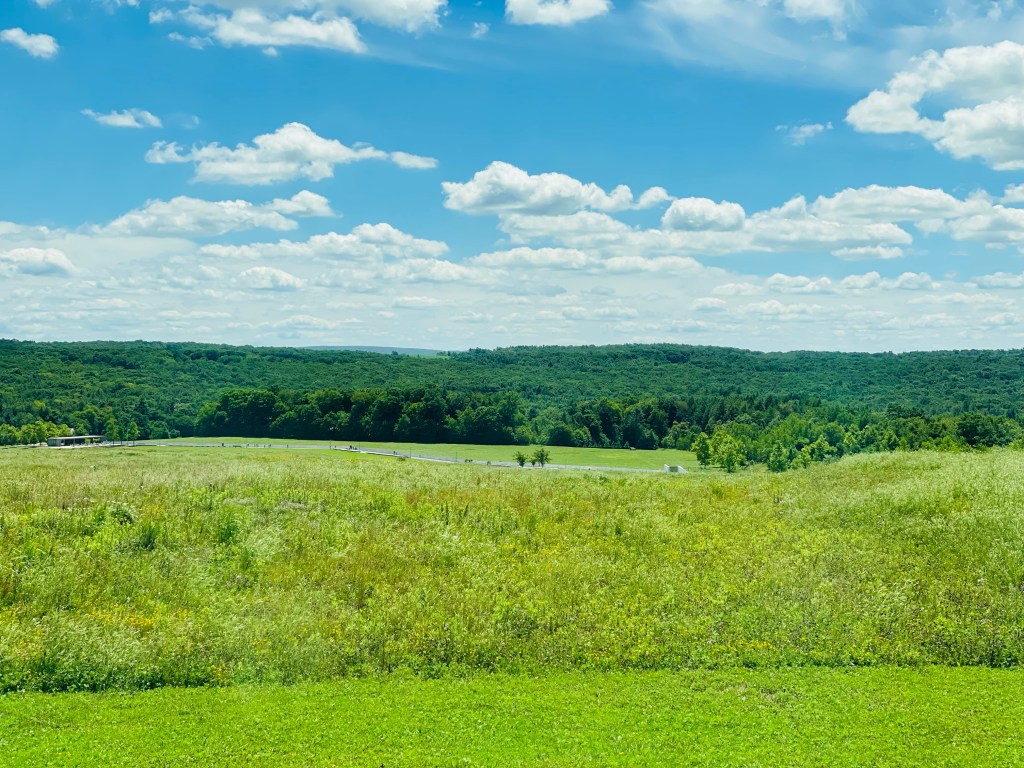
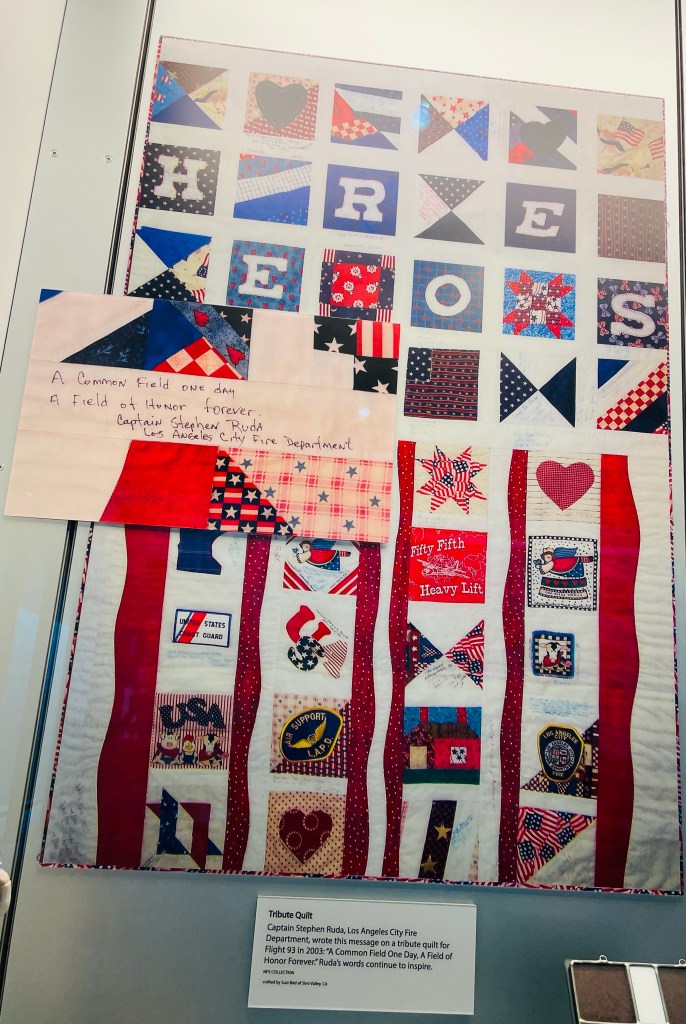
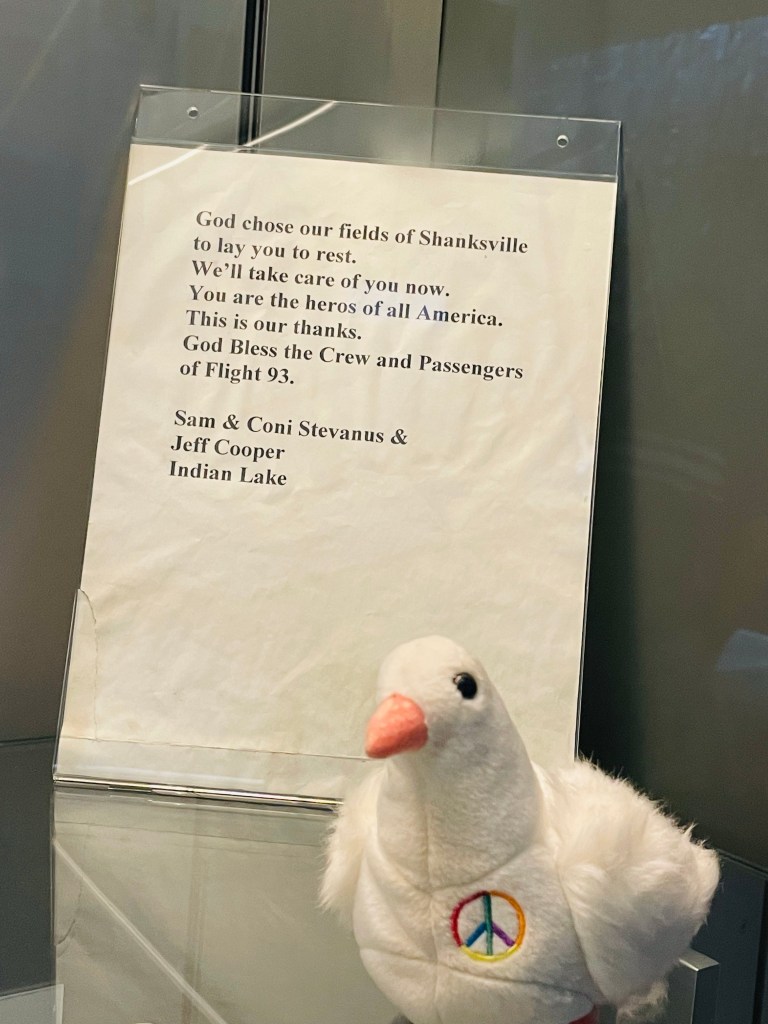
In our road trip travels, heroism can pop up at any time or place when I encounter humans or even animals who answer a challenging situation with honorable service toward the greater good. So I’ve already paid tribute in my last blog to my being a witness at Independence Hall in Philadelphia where the bold actions of those distinguished “Founding Founders” in 1787 approved a written document of Constitutional government safeguarding our America’s Democracy of “We The People” to endure. But in passing throughout the region of Western Pennsylvania on this latest driving adventure, I witnessed three other exemplary models of heroism as well. At the conclusion of this blog, I thus invite you take a few minutes to observe my Pennsylvania Field of Honor in my latest photo collection.

So let’s begin near in those remote fields and woods near the small farm village of Shanksville, where Ruth and I obtained a firsthand look last Saturday at the tragic crash site of Flight 93. As a point of reference on this visit, a large boulder in the distance marks the spot where thirty three passengers and seven crew members perished on December 7, 2001. However, during those panic-struck minutes when the aircraft remained airborne and in full control of the terrorists, unarmed passengers came together in a heroic yet inevitably futile attempt to defeat al Qaeda and regain control of the plane. Consider then the magnitude of their heroism at the time of the plane crash. For with only eighteen minutes of flying time back to Washington D.C., the risk of terrorists turning the planes around and crash landing on other iconic landmarks of our nation’s capitol seemed likely that day.

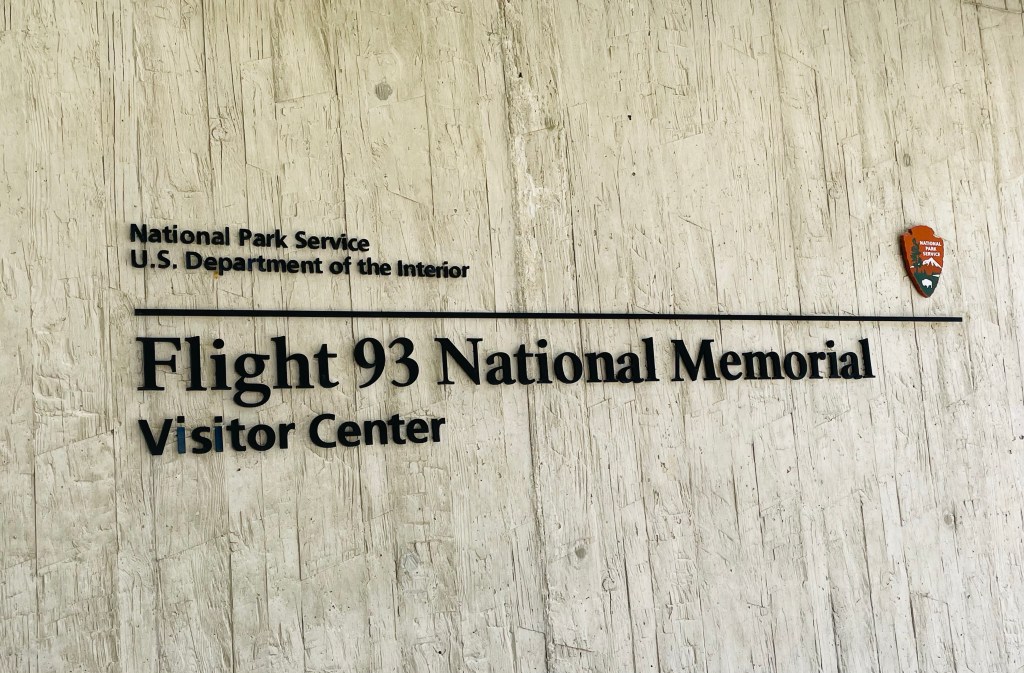
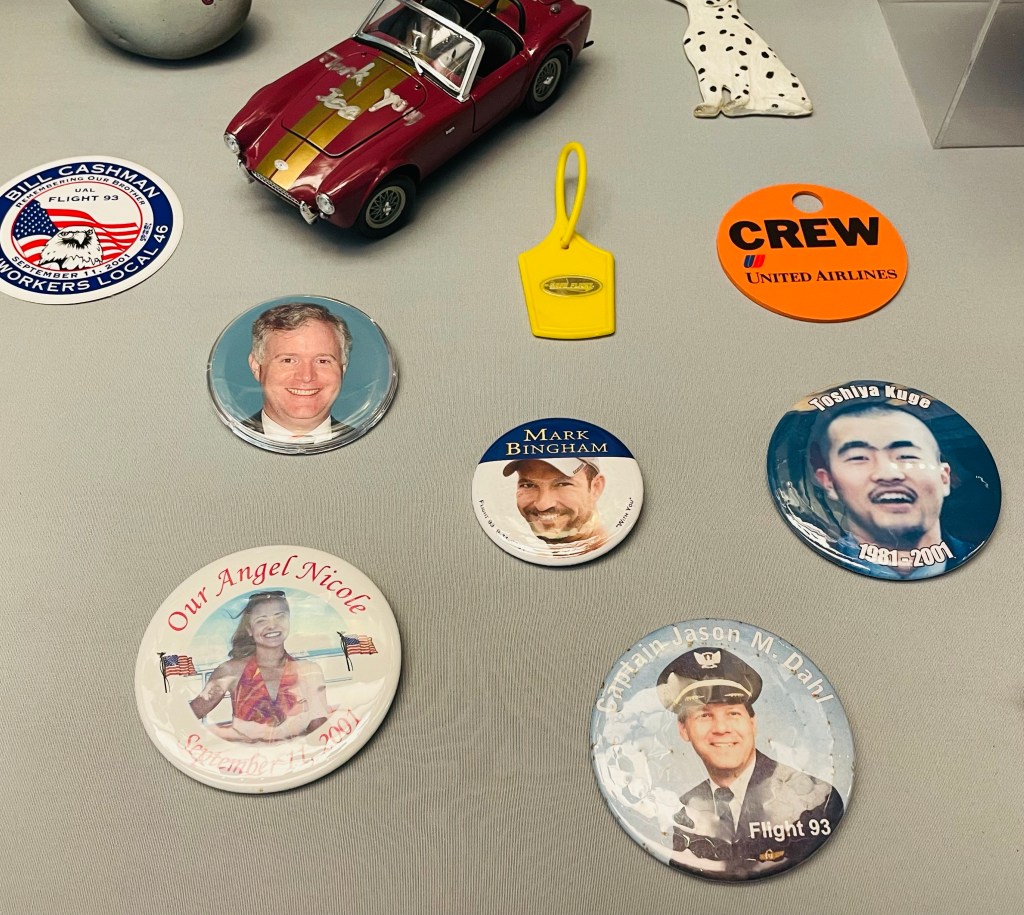
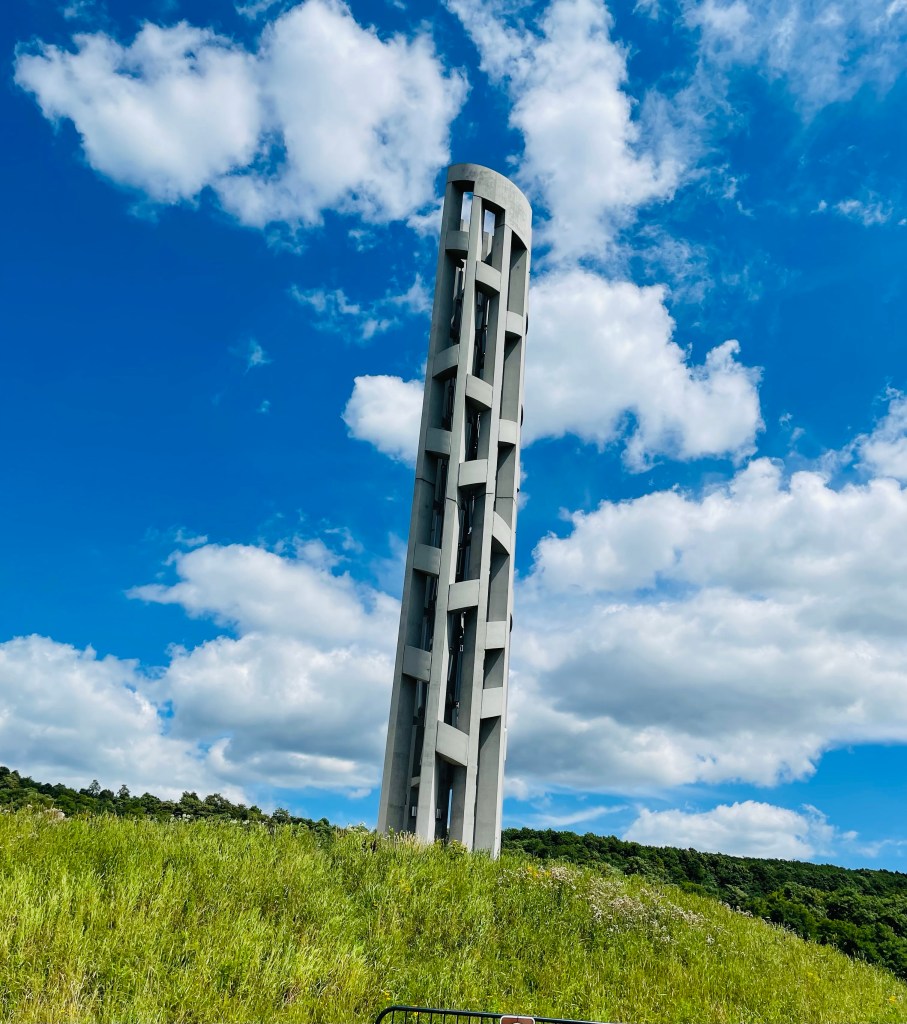
Two notable landmarks we visited then at this final resting place for those unselfish heroes who perished that day took place at the National Memorial Visitor and adjacent Memorial Plaza showcasing an extensive collection of family and friend remembrances and a detailed explanation of the tragic events that happened that day. We then drove a short distance to obtain a close look at the crash site now lined along it’s perimeter by a paved walkway leading to a poignant Wall Of Names. A final place of Flight 93 tribute took place a few miles back toward the main entrance at the Tower of Voices where wind chimes rang softly along this creative obelisk in musical remembrance to those victims that day.

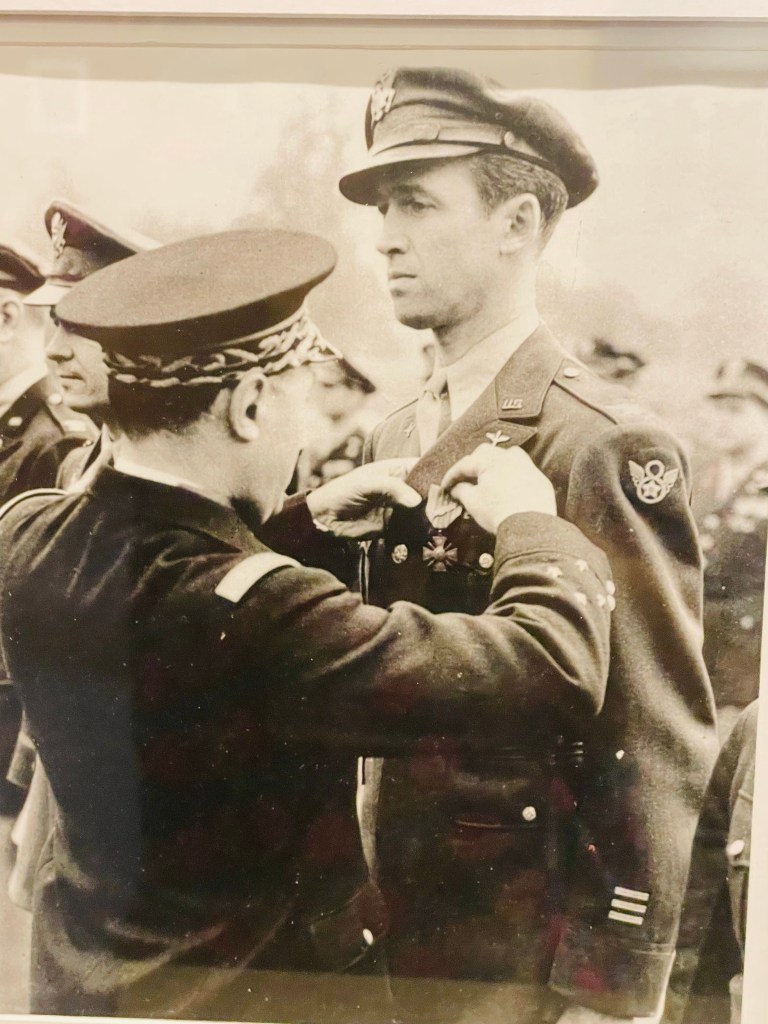
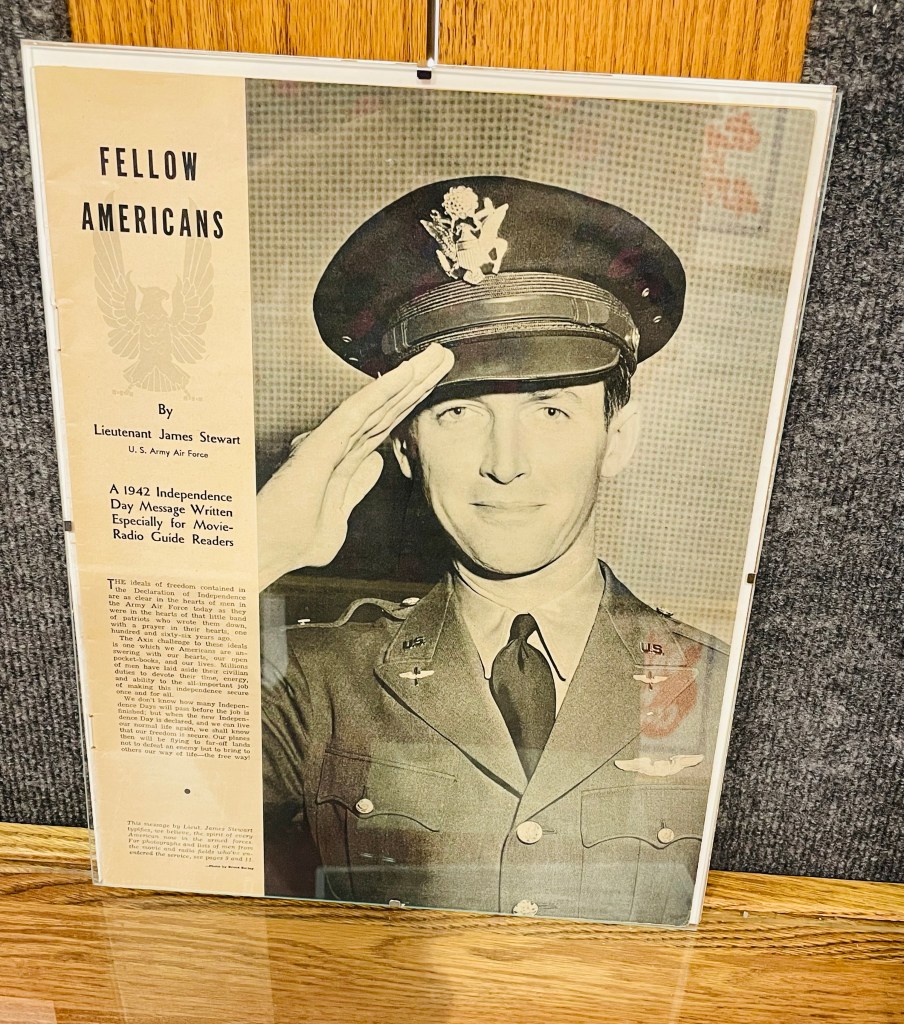
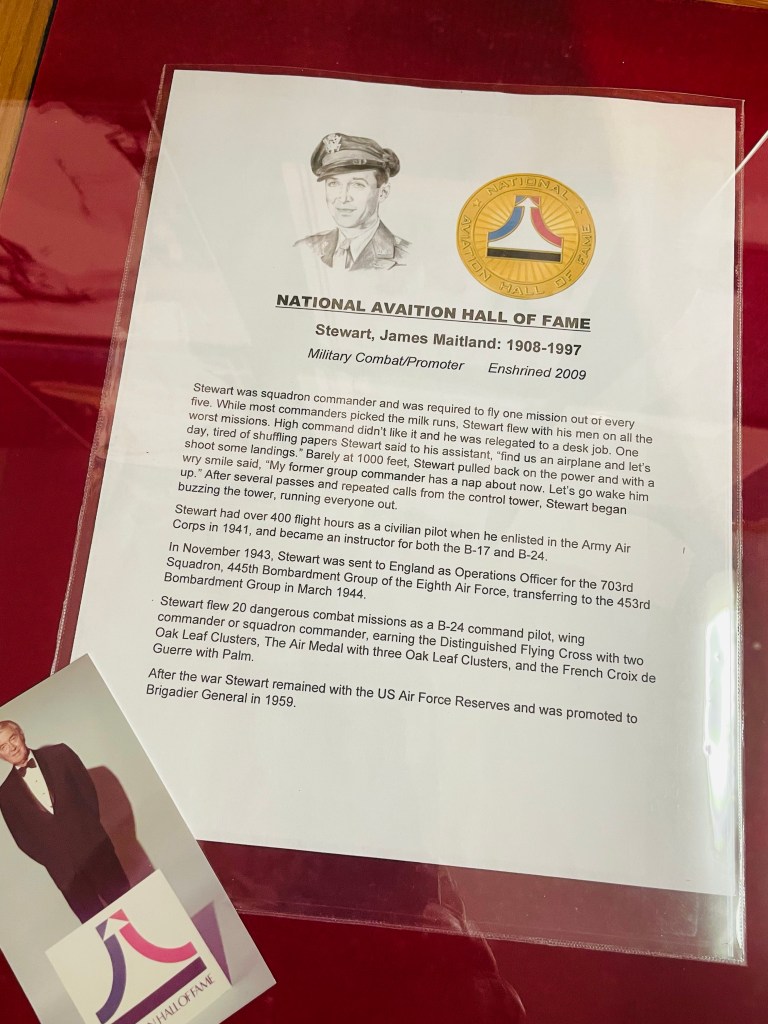
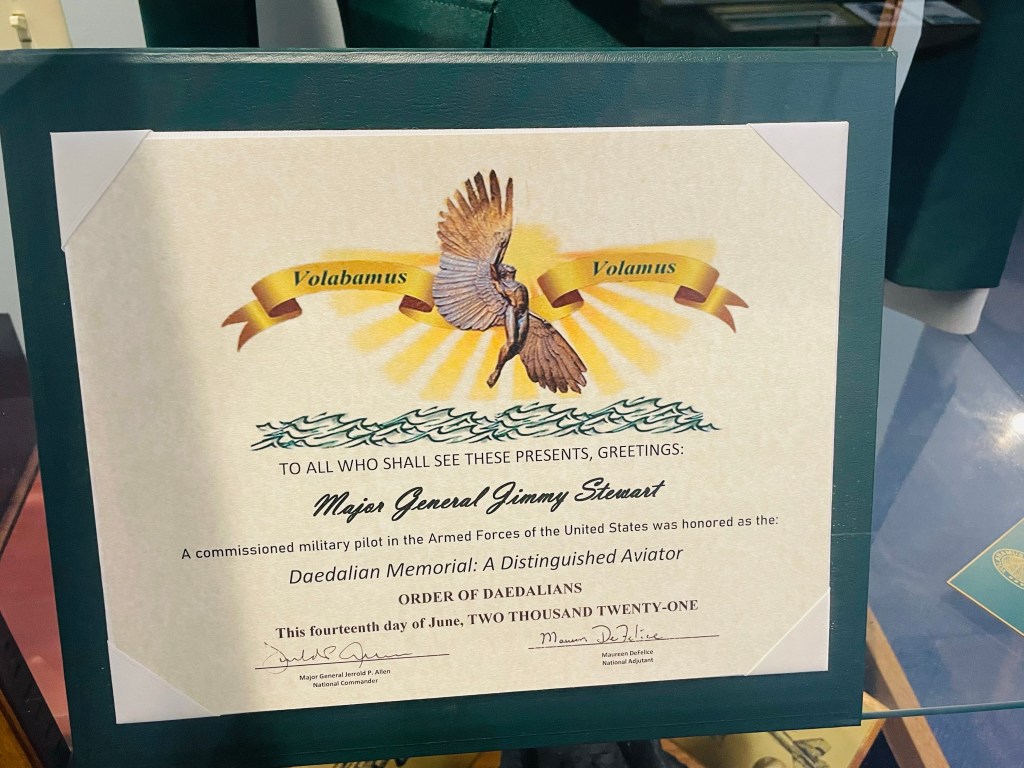
Moving on that afternoon to Indiana, Pennsylvania, I’d looked forward to paying a visit to the Jimmy Stewart Museum during our two day stay. So upon walking through its six galleries that documenting  this famed movie actor’s life, I discovered a humble man of heroic stature who sacrificed years of film stardom to embark on a twenty seven career in the military during and after World War Two. Know that after Jimmy enlisted in the Army Air Corps as a private, by war’s end, he became fully decorated as a colonel, flying twenty, dangerous combat missions over Germany as a squadron leader in a B-24 Allies plane. On a personal note, it seemed very perplexing to me at the conclusion of this visit, that my father, who also risked his life in bombing raids over Germany form 1944-1945 did not also gain similar public recognition for such heroic deeds as well.

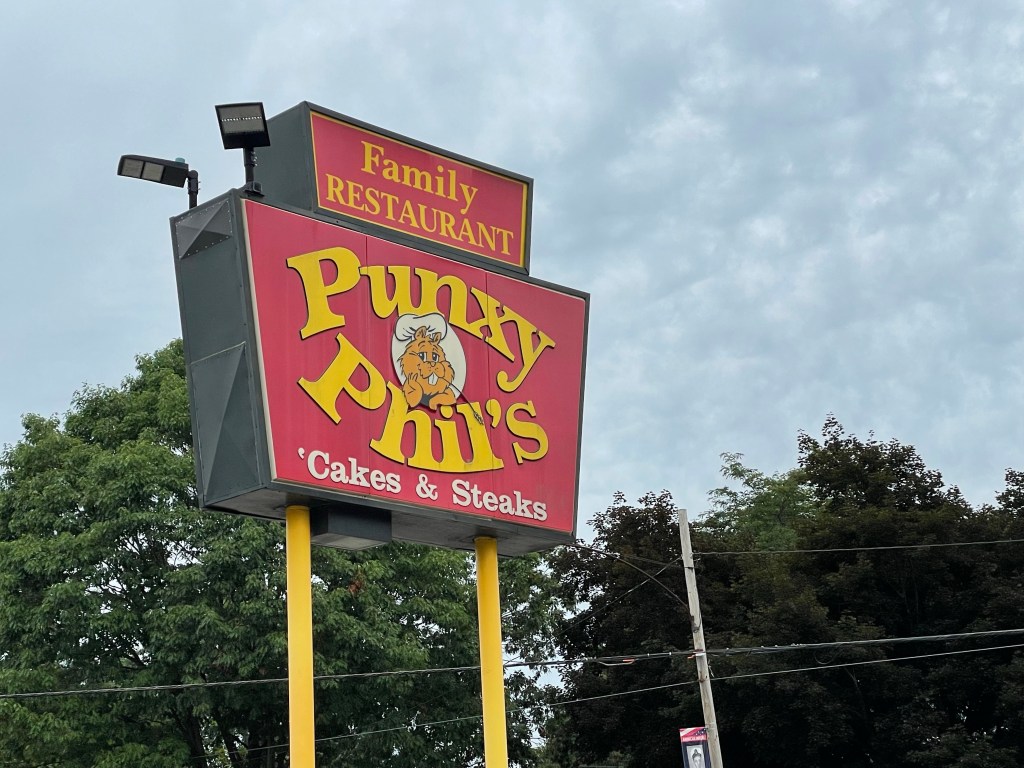
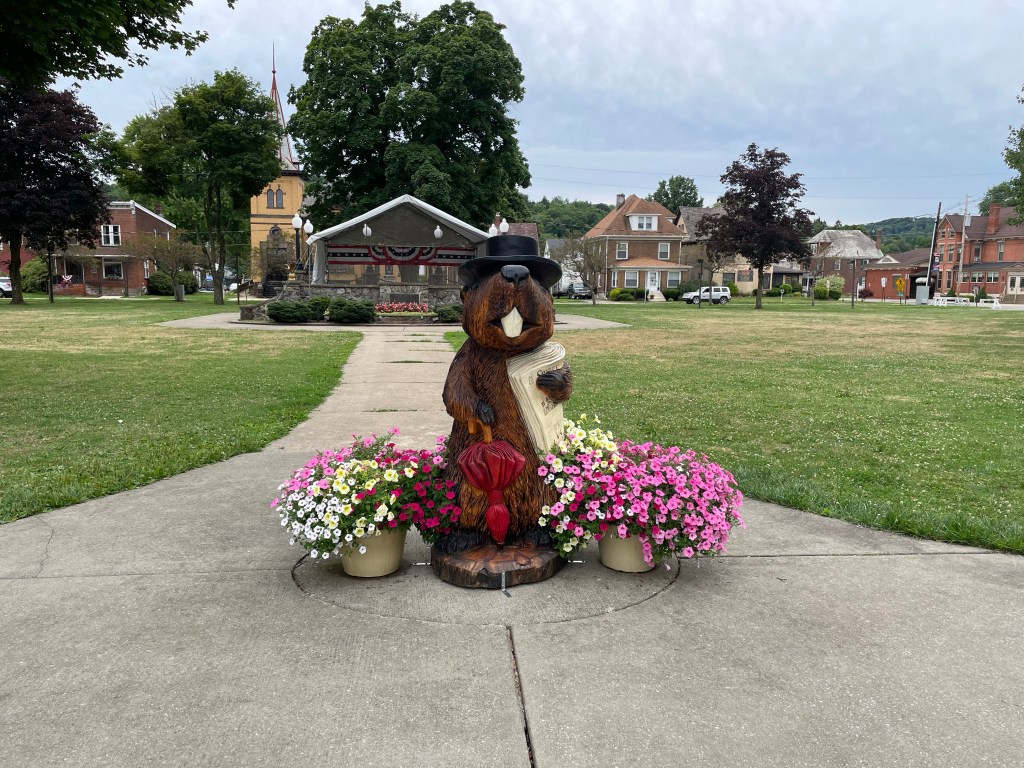
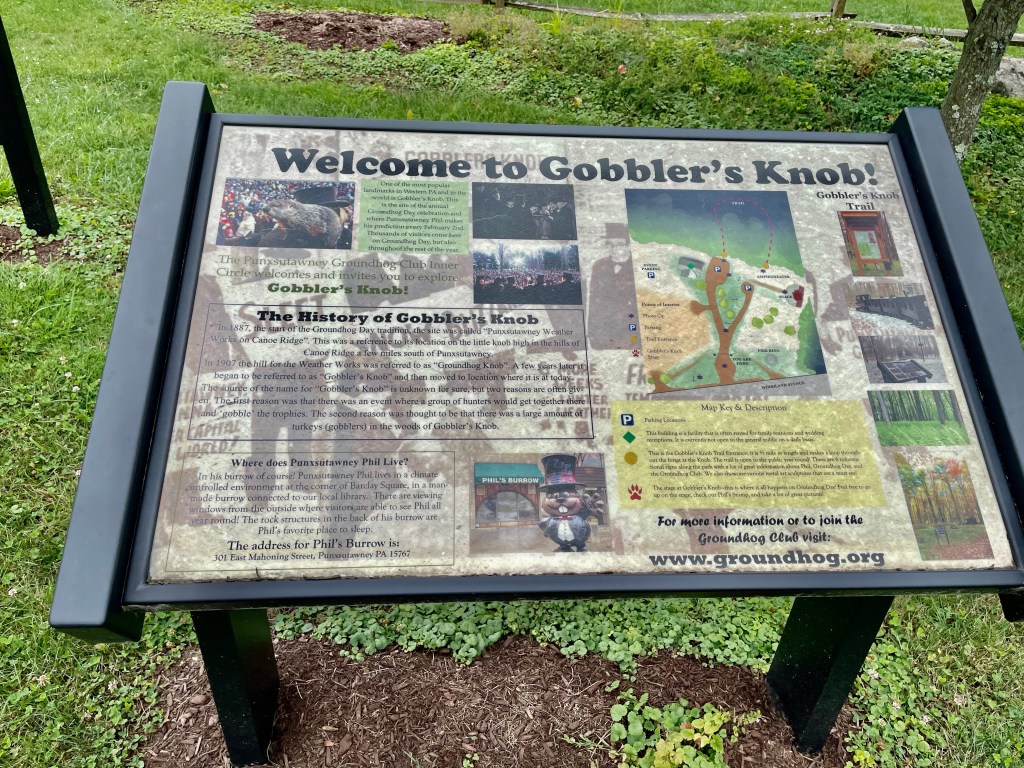
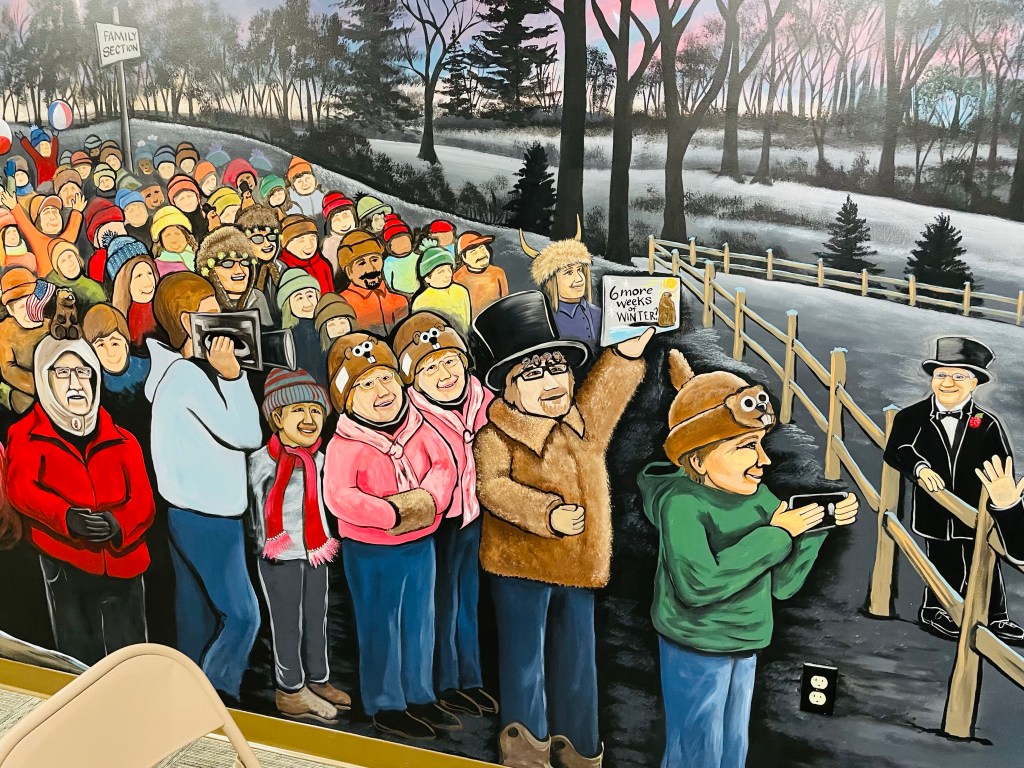
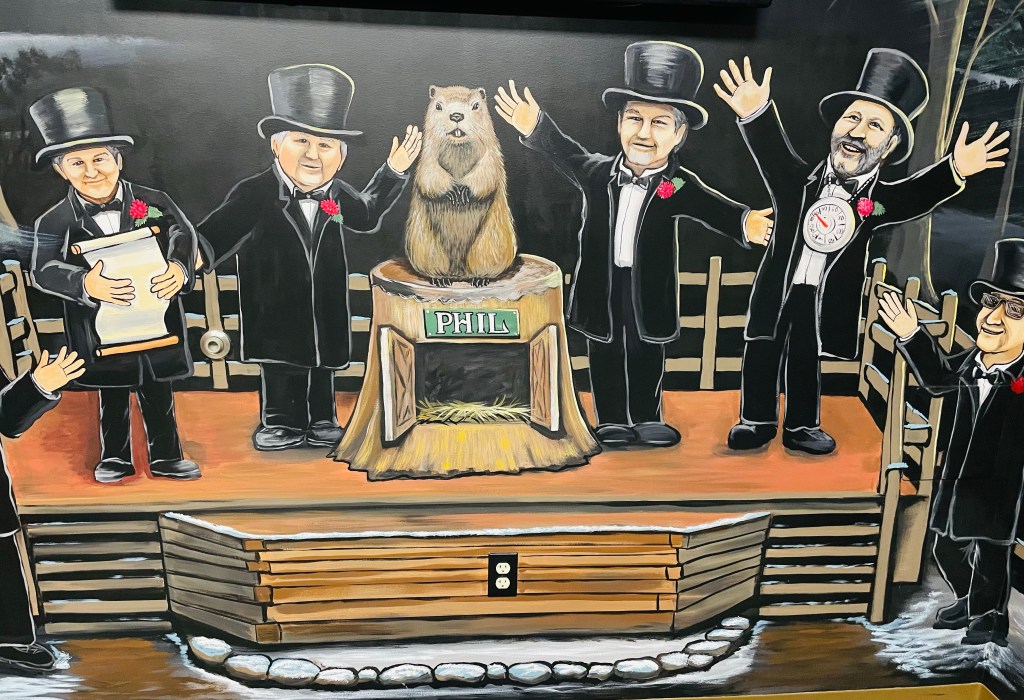
It might seem odd for me to recognize a furry animal as model of heroism on our road trip endeavor. But at our final Western Pennsylvania stop in the quiet village of Punxsutawney, a local ground hog named Phil, each year, emerges from his burrow at the beginning of February in town each year to provide hope to weather enthusiasts for winter’s end near and far. In fact, Phil’s legacy as a local hero all over town in Punxsutawney seems so powerful that town leaders have built him a safe indoor burrow to insure his survival year around at Barclays Square.

Philadelphia Freedom Flowing

We the people are the rightful masters of both Congress and the courts, not to overthrow the Constitution but to overthrow the men who pervert the Constitution” (Abraham Lincoln)

The sheer amount of American History in Philadelphia, Pennsylvania overwhelms me with chills of joy. So with only two days to spare here on our latest road trip, I felt that a one day walking tour around the colonial city center would provide the best option to pursue. Some highlights from my itinerary there are briefly described below.

1. National Constitution Center – Surround yourself along circular tour route with over 250 years of our U.S. Constitution in action. Walk amid life-size statues of the 42 men who gathered in Philadelphia for the signing of the Constitution on September 17, 1787. Observe two special exhibits documenting the long struggle for women’s right to vote leading up to the 19th amendment passage and the African American struggle for Civil Rights during the Post Civil War Reconstruction period.

2. Independence Hall – Enter the Assembly Room on a short tour where the birthplace of the United States Democracy took place. In 1776, the Second Continental Congress signed the Declaration of Independence here. While 11 years later, in the same room, delegates to the Constitutional Convention created and signed the United States Constitution. Then move to the West wing to see one of the original documents of the U.S. Constitution, Declaration of Independence, and Articles of Confederation.

3. Christ Church Burial Ground – Pay homage to the final resting place of Benjamin Franklin and four other signers of the Declaration of Independence who are unceremoniously buried in here

So I’m sitting contentedly in Washington Square Park in Philadelphia the next day pondering what I’ve learned from yesterday’s visit to the birthplace of America’s democracy. A few hours earlier, I had witnessed a blazing restaurant fire take place in a popular downtown restaurant as we we were walking nearby. I immediately noticed then an efficient response of fire and police working in cooperative tandem to de-escalate any danger to the large gathering crowd while on-site reporters reported the “Breaking News” live on camera for all to see.

So I applaud the city of Philadelphia for demonstrating to me in this dire emergency how Americans can effectively work together for the common good in our democracy as our Constitution intended. For absent such rules of free government, what alternative scenario could have taken to place if Authoritarian leadership had been in control? How quickly would the public authorities have arrived on the scene in response to quell any neighborhood panic? Would bystanders be shot by the secret police if they encroached to closely on the scene? How would this tragic event of human concern be covered in the heavily propagandized media that seemed accustomed to “spinning’s lies about any negativism concerning their autocratic regime.

So Let’s face it. America needs leaders who respond well to the will of all people they serve not a system where the people serve at the whims of insensitive despots in charge. That’s our Constitutional way. ” So let’s heed the warnings as John Adams, esteemed “Founding Father” who once said ” But a Constitution of government once changed from freedman can never be restored. Liberty, once lost, is lost forever.” So I welcome you to observe some photographic impressions I took from these Philadelphia landmarks I visited below.

On Hallowed Petersburg Ground

“I feel that duty called me here to fight for home and friends most dear. And if I should be called to stand in bloody conflict hand to hand. I’ll trust in God my only stay and fight until I win the day… (Private Ancil Dycus, 34th North Carolina Infantry)

I’m on truly hallowed ground today as I witnessed the bloody resolution to the last major battle campaign of the Civil War at Petersburg, Virginia on the second day of our road trip. Fortunately, a large expanse of the actual battlefield grounds known as “The Breakthrough” we witnessed lies fully preserved for authentic visitor remembrance along several self guided trails at Pamplin Historic Park . Know that in visiting this landmark, I came to realize that the unselfish bravery and ultimate sacrifice of so many Union and Confederate soldiers here on April 2 , 1865 would be the final spark to ultimately produce within days a peaceful resolution to this long Civil War..

Along with our abbreviated walking tour of the actual battlefield grounds, we also learned that the surrounding land during those war torn times functioned as the tobacco thriving enterprise called Tutor Hall Plantation where enslaved black labor laboriously worked the fields as the “War Between The States” unfolded. So it became imperative in the Pamphlin design of this park to also present a restored version of this “Old South” plantation home with adjoining slave quarters as it most likely appeared during the Civil War period for visitors to see for themselves.

After enduring our invigorating walking experience in the summer heat, a welcoming end to today’s Pamphlin tour took place in the air conditioned comfort the Battlefield Center and National Museum of the Civil War Soldier. This indoor tour enabled us to view a multitude of authentic Civil War battle artifacts, a feature film titled “War So Terrible” and most impressively a “high tech” simulation of the sights and sounds experienced during the Petersburg battle in “virtual reality” fashion. As we ended our three hour tour of the Pamphlin tragedy that day, I pondered how similarly my country seems to be spiraling toward a violent period of crisis in the coming years.

Please be advised that the photos shown below are primarily taken on the outside portions of the Pamphlin complex as photography of exhibits inside the buildings was not permitted.

Beaufort’s Conroy Connection

“When I came to Beaufort I had struck upon a land so beautiful I had to hunt for other words that ached with the joyous, carnal charms of the green marshes that seemed to be the source of all life.” (Pat Conroy)

A few years back, I considered Beaufort, South Carolina as merely a routine stopping point for a one night stay on the way I – 95 northbound on our road-trips. But in that first time drive eastward from the Interstate into a vast swampy region fittingly labeled as “Low Country”, I discovered to my surprise a pedestrian friendly “Old Town district relatively unchanged from its antebellum Civil War heyday in the past. Other historic tidbits soon further engaged my interest as I began to explore beyond the town center as well. Notably, I learned that Hollywood in the early 1990s chose “sleepy town” Beaufort and surrounding waters as the main filming locale of the film Forrest Gump. It also became important for me to know that during the Civil Rights era of the 1970s, Martin Luther King once wrote his famous “I Have A Dream” speech nearby Beaufort on. St. Helena Island. So you might say that I’ve learned to feel quite comfortable in Beaufort precisely by witnessing such vestiges of its historic past on that first tourist “go-around”

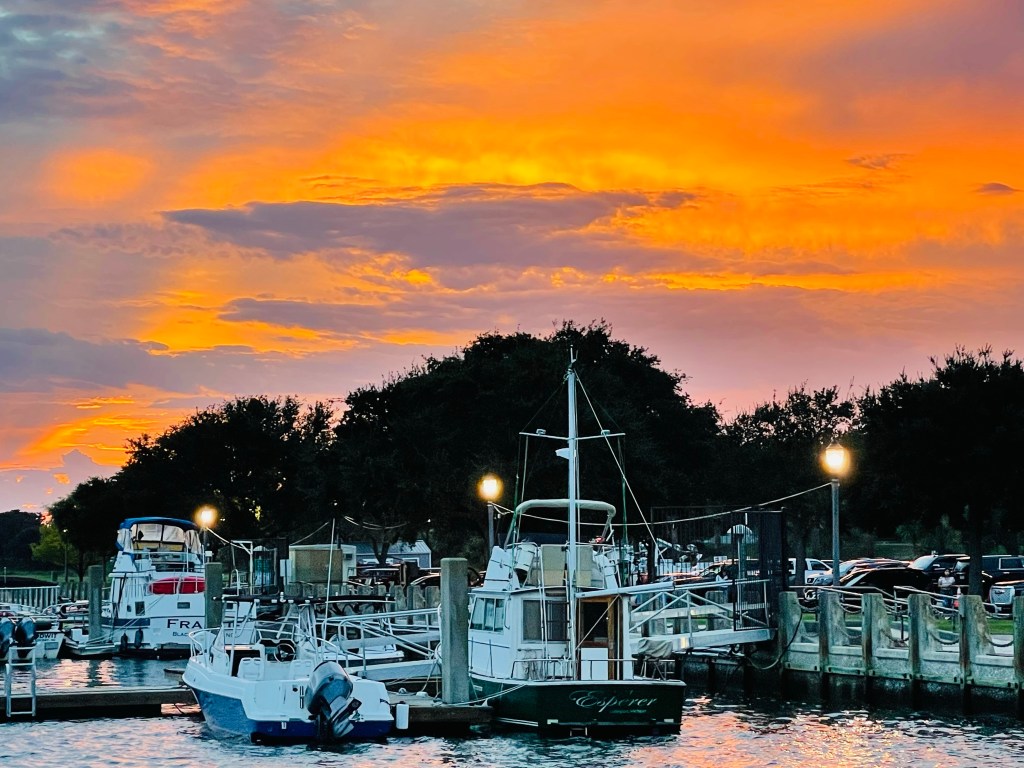
But then I happened to gain a fresh tourist perspective about the Beaufort experience from its celebrated home author of late, Pat Conroy. For I’d been inspired after reading some excerpts from his novel “The Water Is Wide” to take a more intimate look at this author’s time spent growing up and later experiencing literary success as a novelist in Beaufort. So my latest quest for Beaufort understanding began with an intimate look inside the Pat Conroy Literacy Center to begin our latest road trip this week. As I walked around the various halls showcasing authentic mementos from his Beaufort past, I discovered two places around the town that seemed of utmost importance to him while living there. So as Conroy once did, we first ventured to the southerly tip of Old Beaufort along Bay Street, to spend some quiet time under some massive oak trees and magnificent mansions lining the tranquil shores of the Beaufort River swamplands beyond. After dinner, we took an inviting walking tour of nearby Henry C. Chambers Waterfront Park overlooking a spectacular sunset which further enlightened us to the Conroy’s love of Beaufort as expressed through his novels. Enjoy the photos.

Blog at WordPress.com.

Up ↑